Introduction
Healthcare organizations worldwide are undergoing a massive digital acceleration. From telemedicine adoption and remote patient monitoring to digital-first appointment scheduling, online health portals, pharmacy apps, and AI-driven diagnostics—patient interactions are shifting rapidly into digital channels.
But with digital transformation comes a new operational challenge: identity.
Identity is now central to every modern healthcare workflow:
-
Patient onboarding
-
Authentication to patient portals
-
Access to personal health data
-
Telemedicine appointments
-
Prescription refills
-
Insurance claims access
-
Caregiver or family access
-
Clinical communication
-
Multi-provider coordination
-
Remote monitoring and IoT health devices
Healthcare identity is uniquely complicated because it must balance:
✓ Frictionless patient experience
Patients expect simple, mobile-friendly access.
✓ Extremely high security standards
PHI is the most valuable information on the black market.
✓ Strict compliance requirements
HIPAA, HITECH, GDPR, CCPA, state-level mandates, and more.
✓ Multi-system fragmentation
Hospitals, clinics, labs, pharmacies, and insurers often use different systems.
✓ High stakes
Identity errors can impact treatment, access to medication, and patient safety.
This is why modern healthcare organizations—from hospital networks to telemedicine startups—are turning to Customer Identity and Access Management (CIAM) solutions like LoginRadius to secure digital patient services, streamline identity experiences, and maintain compliance at scale.
This comprehensive industry guide explains how LoginRadius simplifies identity management for healthcare providers, strengthens security, protects PHI, and delivers seamless patient experiences across all digital touchpoints.
Why Healthcare Organizations Need Modern CIAM
Identity challenges in healthcare differ significantly from those in retail, finance, or media. Healthcare identity is sensitive, fragmented, high-risk, and deeply connected to patient outcomes.
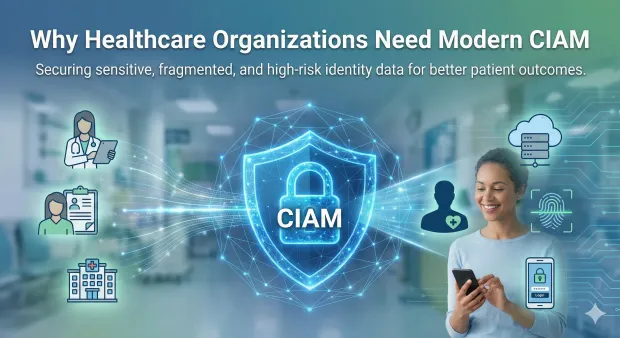
Below are the core drivers.
1. Securing Patient Accounts Against Identity Fraud
Healthcare faces more identity theft than any other industry because:
-
PHI (Protected Health Information) is highly valuable for fraud
-
Medical identity theft enables insurance fraud, fake prescriptions, and illicit access to care
-
Password reuse puts patient portals at risk of credential stuffing
-
Telemedicine introduces new vectors for ATO (Account Takeover)
-
Criminal marketplaces often resell patient logins and insurance data
Common attacks include:
-
Credential stuffing against patient portals
-
Fake patient accounts to obtain prescription drugs
-
Insurance portal fraud
-
Telemedicine session hijacking
-
Account takeover via compromised credentials
LoginRadius helps healthcare organizations reduce fraud by providing:
✓ Adaptive MFA
Triggered when login patterns look suspicious.
✓ Risk-based authentication
Analyzes device, IP, location, and behavioral signals.
✓ Secure session management
Prevents hijacking of telehealth or portal sessions.
✓ Passwordless options
Eliminates the risk of weak or reused passwords.
✓ Automated bot filtering
Stops automated attacks before they reach patient systems.
✓ Device fingerprinting
Identifies unusual device activity instantly.
Identity security is essential for patient trust—and LoginRadius provides the safeguards needed for PHI protection.
2. Enabling Seamless Access to Digital Health Services
Healthcare access must be simple, especially as patients increasingly interact through:
-
Patient portals
-
Mobile apps
-
Telemedicine platforms
-
Scheduling apps
-
Pharmacy or lab portals
-
Insurance portals
-
Wearables and remote monitoring devices
But legacy healthcare identity is notoriously frustrating:
-
Password reset failures lead to missed appointments
-
Patients maintain multiple logins across providers
-
Telehealth login can be slow or inconsistent
-
Elderly patients struggle with multi-step authentication
-
Identity verification often requires phone calls or manual checks
LoginRadius provides:
✓ Unified identity across all apps
One login for portals, telehealth, labs, and mobile apps.
✓ Passwordless login
Passwordless login is critical for patients with mobility or accessibility challenges.
✓ Mobile-first authentication flows
Optimized for smartphone-based patient access.
✓ Family/caregiver access support
Allows authorized individuals to manage dependent accounts securely.
✓ Session continuity
Patients can rejoin telehealth calls or reopen records across devices.
Healthcare UX must reduce friction—LoginRadius makes it simple.
3. Supporting Care Continuity Across a Multi-Provider Ecosystem
Healthcare identity fragmentation is a major challenge. Patients often interact with:
-
Primary care clinics
-
Hospitals
-
Specialist providers
-
Pharmacies
-
Labs
-
Imaging centers
-
Telehealth platforms
-
Insurance companies
-
Referral networks
Each system often uses its own identity database, login method, and patient record structure—leading to:
-
Inconsistent patient identity
-
Duplicate or mismatched records
-
Data silos that disrupt treatment
-
Confusion for patients and caregivers
-
Security and compliance risks
LoginRadius helps solve these challenges through:
✓ Unified Patient Identity
A single profile across all digital health services.
✓ Secure APIs for identity interoperability
Integrates with EMRs, labs, diagnostics, and insurance systems.
✓ Identity linking
Connects multiple patient IDs under one centralized identity.
✓ Support for caregiver roles
Caregivers can access the right patient data with appropriate permissions.
Care continuity improves when identity is unified—and LoginRadius provides that foundation.
4. Meeting Strict Healthcare Compliance Requirements
Healthcare requires the highest levels of compliance:
-
HIPAA
-
HITECH
-
GDPR (for international patients or telehealth)
-
CCPA/CPRA
-
PIPEDA
-
NIST guidelines
-
State medical privacy regulations
-
Consent and privacy documentation
LoginRadius supports compliance by offering:
✓ Privacy and consent management
Capture consent for:
-
Data access
-
Treatment workflows requiring authorization
-
Marketing communications
-
Sharing with third-party providers
✓ Audit logging
Every identity-related action is recorded.
✓ Data residency controls
Store identity data in specific regions.
✓ Secure PHI storage
Industry-standard data protection and encryption.
✓ Role-based and policy-based access controls
Ensures only authorized users can access PHI.
✓ HIPAA-ready architecture
Encryption, session controls, identity governance, and breach prevention.
Healthcare identity must be secure, traceable, and compliant—and LoginRadius is built to help providers achieve that.
How LoginRadius Simplifies Identity for Healthcare and Digital Health
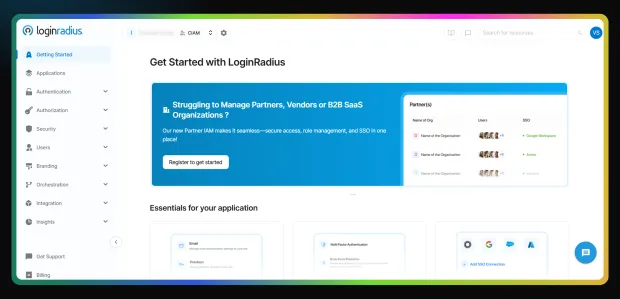
Let’s look at how LoginRadius directly solves healthcare’s identity challenges.
Unified Patient Identity Across All Healthcare Touchpoints
For most patients, identity is fragmented across:
-
Patient portals
-
EHR/EMR accounts
-
Lab and diagnostic accounts
-
Telemedicine apps
-
Pharmacy apps
-
Insurance portals
-
Fitness/wellness apps
LoginRadius unifies identity across these systems by:
✓ Providing a single patient profile
Accessible across all digital healthcare systems.
✓ Synchronizing identity attributes in real time
Ensures consistency across providers and services.
✓ Supporting multi-factor access
Ensures secure login across mobile, desktop, and tablets.
✓ Enabling caregiver or family member accounts
Role-based access to dependent data.
✓ Integrating identity across EMR/EHR systems
Simplifies record access and onboarding.
This eliminates confusion, reduces duplicates, and improves access to care.
High-Security Authentication Built for Healthcare
Patients require easy login. Providers require strict access control. Balancing both is a challenge—and LoginRadius is designed to bridge that gap.
Passwordless Login
Perfect for patients who may forget passwords or require assisted access.
Adaptive Multi-Factor Authentication
Enforces stronger security when identity risk increases.
Biometric Login
Supports device-native biometrics for mobile-first patient access.
Risk-Based Authentication
Prevents suspicious access without burdening legitimate patients.
Secure Session Management
Prevents session hijacking in telemedicine or portal sessions.
Device Intelligence
Detects unrecognized devices accessing PHI.
Healthcare workflows become safer without compromising usability.
HIPAA-Ready Privacy, Consent, and Data Governance
Healthcare requires meticulous tracking of how patient data is accessed, used, and shared.
LoginRadius offers:
Consent Capture
Patients can approve:
-
Data sharing
-
Clinical communications
-
Personalized recommendations
-
Telehealth disclosures
-
Parental consent for minor access
Patient Rights Management
Built-in tools for:
-
Data access requests
-
Record export
-
Data deletion
-
Consent withdrawal
Auditability
Complete logs for all identity and access events—critical for HIPAA and HITECH.
Privacy Dashboards
Patients can view and manage their privacy preferences.
Policy Enforcement
Ensure every identity interaction follows organizational rules.
Identity governance is essential in healthcare—and LoginRadius makes it manageable.
Healthcare-Grade Data Residency & Storage
LoginRadius supports region-specific storage for sensitive health data, allowing healthcare companies to:
-
Meet national data residency laws
-
Isolate patient identities by region
-
Apply different privacy rules per jurisdiction
All PHI-related identity attributes are securely encrypted and stored in infrastructure designed to meet healthcare security expectations.
Interoperability & Integration with Healthcare Systems
No healthcare system stands alone. Providers use a wide range of platforms, including:
-
EHR/EMR: Epic, Cerner, Athenahealth, Meditech, Allscripts
-
Telehealth: Amwell, Teladoc, MDLive
-
Pharmacy and lab systems
-
Referral systems
-
Patient scheduling platforms
-
Radiology and imaging portals
-
Insurance and payer portals
-
FHIR APIs and HL7 integrations
LoginRadius integrates with healthcare systems via:
-
OAuth 2.0 / OIDC
-
FHIR-compliant authentication flows
-
REST APIs
-
Event-based webhooks
-
Directory synchronization
-
Patient identity linking
This interoperability ensures identity can move smoothly across healthcare ecosystems.
Key LoginRadius Features Designed for Healthcare
Here are the healthcare-specific capabilities that distinguish LoginRadius.
1. Adaptive MFA for Secure PHI Access
Healthcare accounts need stronger protection than standard consumer accounts.
LoginRadius supports:
-
SMS/email OTP
-
TOTP apps
-
Push notifications
-
Device biometrics
-
Adaptive triggers based on risk
This protects patient data without overwhelming the patient experience.
2. Passwordless Authentication for Telehealth Simplicity
Telemedicine requires fast and frictionless login—especially on mobile. Passwordless login enables immediate access without password resets or account lockouts.
3. Caregiver, Family, and Dependent Account Support
Many patients require support from:
-
Parents
-
Children
-
Spouses
-
Assigned caregivers
-
Legal guardians
LoginRadius supports:
-
Linked identities
-
Delegated permissions
-
Scoped access to PHI
-
Role-based viewing rights
This is crucial for pediatric, elderly, and assisted-care use cases.
4. Strong Identity Verification & Fraud Prevention
Identity verification is essential for:
-
Telehealth visits
-
Prescription access
-
Insurance validation
-
Preventing medical identity theft
LoginRadius supports integrations with KYC/ID verification providers.
5. Privacy & Consent Management
Healthcare requires explicit permission for:
-
Data sharing
-
Telemedicine services
-
Communication preferences
-
Parental controls
-
Marketing communications
LoginRadius automates these workflows.
6. Patient Self-Service Account Tools
Empowering patients reduces administrative load:
-
Profile updates
-
Password resets
-
Device management
-
Consent management
-
MFA changes
-
Account recovery
7. Secure APIs for Healthcare Developers
Developers need flexibility to integrate identity into:
-
Mobile health apps
-
Hospital portals
-
Wearable integrations
-
Scheduling workflows
-
EMR/EHR systems
LoginRadius provides stable, secure APIs and SDKs for healthcare innovation.
Healthcare Use Cases LoginRadius Supports
1. Patient Portals & Online Health Records
Modern patient portals are the digital front doors of healthcare systems. They allow patients to:
-
View test results and lab reports
-
Check medical history
-
Request prescription refills
-
Schedule and manage appointments
-
Exchange secure messages with clinicians
-
Review visit summaries and care plans
-
Access immunization and vaccination records
These systems hold highly sensitive PHI, yet must remain accessible to patients of all ages and abilities.
LoginRadius strengthens patient portal experiences through:
-
Secure authentication with MFA or passwordless options
-
Unified identity across mobile, desktop, and tablet portals
-
Adaptive security that prevents ATO attacks without blocking legitimate users
-
Self-service profile management to reduce administrative overhead
-
Caregiver-linked accounts for children, seniors, or assisted-care patients
This ensures that portals remain compliant, secure, and easy for patients to use—improving engagement and outcomes.
2. Telemedicine & Remote Care Platforms
Telehealth usage has exploded, and secure identity is now critical for:
-
Virtual primary care visits
-
Behavioral and mental health consultations
-
Specialist appointments
-
Post-operative check-ins
-
Video-based chronic condition monitoring
-
Remote diagnostic sessions
Unlike in-person care, providers cannot rely on face-to-face verification, making digital identity a crucial safeguard.
LoginRadius enables seamless, secure telehealth access by supporting:
High-security login
-
Adaptive MFA for high-risk sessions
-
Device-based biometrics for mobile telehealth
-
Passwordless login to reduce login friction
Low-friction user experience
-
One-tap access on mobile
-
QR-based login for shared devices
-
Persistent, secure sessions to avoid repeated logins
Remote patient monitoring (RPM) integrations
Many RPM solutions rely on identity to:
-
Sync device data with the correct patient record
-
Trigger alerts based on patient-specific thresholds
-
Authenticate patients using wearables or IoT devices
LoginRadius ensures these experiences remain secure, accurate, and easy to access.
3. Digital Health Apps
Digital health innovators — from mental health platforms to wellness apps and chronic care management tools — rely on identity as a core infrastructure layer.
Common digital health app categories include:
-
Fitness and wellness apps
-
Sleep tracking and circadian health apps
-
Nutrition and lifestyle coaching platforms
-
Mental health apps for therapy and CBT
-
Chronic care management platforms (diabetes, hypertension, etc.)
-
Women’s health and fertility apps
-
Rehabilitation and physical therapy apps
-
Medication adherence apps
LoginRadius supports these apps by offering:
-
Fast mobile-first authentication optimized for iOS and Android
-
Passwordless onboarding to improve sign-up conversion
-
Secure session handling for sensitive health interactions
-
Data consent capture for personalized recommendations
-
Scalable identity as apps grow from thousands to millions of users
This allows digital health companies to focus on clinical innovation while relying on a trusted CIAM foundation for identity and security.
4. Pharmacy, Lab, and Diagnostic Systems
Patients frequently access a variety of healthcare platforms beyond the main provider network, including:
-
Pharmacy prescription portals
-
Lab result dashboards
-
Imaging and radiology systems
-
Diagnostic testing portals
-
Home-test kit result platforms
The challenge?
These systems often operate independently, leading to fragmented identity and inconsistent security.
LoginRadius helps unify and secure these experiences by enabling:
-
Single patient identity across pharmacy, lab, and diagnostic systems
-
HIPAA-ready authentication flows for PHI-heavy platforms
-
Consistent consent and privacy management
-
Secure, unified profile data that ties results to the right patient
-
Interoperability through standards-based APIs
This brings consistency to the entire diagnostic workflow — from test ordering to result delivery.
5. Multi-Provider Healthcare Networks
Large healthcare organizations often manage:
-
Multiple hospitals
-
Regional clinics
-
Specialty centers
-
Urgent care locations
-
Affiliated private practices
-
Partner labs and imaging centers
Each system may use different EMRs, different patient portals, and different authentication stacks — making unified identity extremely difficult.
LoginRadius supports multi-provider networks through:
Shared identity infrastructure
One identity layer across multiple hospital systems.
Cross-provider identity linking
Connects a patient’s multiple IDs into one unified profile.
Role-based access for clinicians and staff
Ensures everyone accesses the right data at the right level.
Distributed identity management
Supports national or regional health networks.
This improves continuity of care, reduces duplicate patient records, and enhances the patient experience across the entire care ecosystem.
6. Insurance and Member Portals
Health insurers require strong identity for:
-
Benefits management
-
Claims submission and tracking
-
Provider search
-
Prior authorization workflows
-
Cost estimations and billing
-
ID card access
-
Member profile updates
These portals store financial data and medical information, creating unique security and compliance obligations.
LoginRadius powers insurer identity experiences by providing:
-
High-security authentication flows suitable for financial-grade environments
-
Adaptive MFA and device intelligence to prevent fraudulent access
-
Privacy and consent management for regulated personal data
-
Unified identity across member, employer, and provider portals
-
Scalable infrastructure for millions of members
This ensures members, providers, and payers access the right information securely — without unnecessary friction.
Why Healthcare Providers Choose LoginRadius Over Other CIAM Platforms
1. Strong PHI Security Without Hurting UX
Healthcare organizations must enforce strict PHI protections, but they also serve patients who may struggle with overly complex login flows—especially seniors, individuals with limited digital literacy, or patients accessing care during stressful health events. Our platform is engineered to balance these realities.
LoginRadius provides:
-
Adaptive MFA that only steps in when risk is detected
-
Passwordless login for patients who cannot remember credentials
-
Risk-based authentication to block threats silently
-
Session intelligence to prevent session hijacking
-
Device fingerprinting to identify suspicious access patterns
This ensures HIPAA-level protections without creating barriers that cause missed appointments or patient frustration.
2. HIPAA-Ready Architecture & Privacy Controls
Healthcare identity requires airtight compliance—and LoginRadius is built to support organizations operating under HIPAA, HITECH, GDPR, CCPA, and other medical privacy frameworks.
Our CIAM platform includes:
-
Comprehensive audit trails for every login, consent event, and identity change
-
Fine-grained privacy and consent capture, including parental or caregiver permissions
-
Encrypted PHI identity attributes at rest and in transit
-
Data residency controls to meet jurisdiction requirements
-
Role-based access enforcement to prevent unauthorized data exposure
These capabilities help healthcare teams reduce compliance overhead and maintain full traceability of identity events across clinical, administrative, and telehealth environments.
3. Scalable Identity for Clinics to Large Hospital Networks
Healthcare environments range from small specialty clinics to massive, multi-state hospital systems. LoginRadius scales seamlessly across this spectrum.
Our architecture supports:
-
Millions of patient identities across distributed systems
-
High-performance authentication for large patient portal populations
-
Multi-region deployments for national networks
-
Identity consolidation across multiple EMR/EHR systems
-
Peak traffic readiness during mass appointment booking, flu seasons, or major health events
This makes LoginRadius suitable both for digital health startups and large healthcare enterprises undergoing modernization.
4. Frictionless Telehealth Login Experiences
Telemedicine is now a primary care channel, and login friction directly affects no-show rates, patient satisfaction, and quality of care.
LoginRadius enables:
-
One-tap passwordless access for fast telehealth entry
-
Biometric login via face or fingerprint for mobile sessions
-
QR code login for smart health devices or shared tablets
-
Persistent, secure sessions that reduce repeated sign-ins
-
Adaptive authentication that tightens security only when needed
By reducing login complexity, we help providers deliver smoother, more reliable telehealth experiences while keeping PHI fully protected.
5. Developer-Friendly for Healthcare Interoperability
Healthcare IT ecosystems are notoriously fragmented, often involving:
-
Several EMR/EHR platforms
-
Telemedicine systems
-
Pharmacy and lab networks
-
Diagnostic imaging portals
-
Scheduling and referral management tools
-
Insurance and member portals
-
Remote monitoring and IoT health devices
LoginRadius provides:
-
REST APIs and SDKs that simplify integration across all digital health systems
-
FHIR / OAuth 2.0 alignment for healthcare-standard integrations
-
Event-based webhooks for real-time identity changes
-
Identity linking across multiple system identifiers
-
High availability required for mission-critical clinical workflows
This gives developers a consistent, modern identity layer that accelerates digital transformation without compromising clinical reliability.
Conclusion
Healthcare is becoming digital-first, and identity now determines whether patients can access care securely, conveniently, and consistently. Modern CIAM is the foundation of patient experience, PHI security, telehealth, and cross-provider care coordination.
LoginRadius provides healthcare organizations with:
-
Strong identity protection
-
Seamless patient authentication
-
HIPAA-ready controls
-
Unified identity across multiple healthcare systems
-
Scalable architecture for large patient populations
-
Secure APIs for innovation
Healthcare’s future depends on secure, seamless identity—and our team is here to help providers build that foundation.