Why Organizations Evaluate Alternatives to SecureAuth
SecureAuth is recognized for its adaptive authentication capabilities, contextual risk-based access controls, and flexible policy engine. Many IT teams choose SecureAuth to improve authentication security, strengthen MFA, and enforce granular risk policies across workforce applications.
SecureAuth performs especially well when teams want to elevate assurance levels without completely replacing existing identity infrastructure. Its visibility into risk signals and conditional policies helps prevent unauthorized access attempts and reduce identity risk.
However, workforce IAM programs typically go beyond adaptive authentication and risk scoring. As organizations mature, they require a broader set of capabilities — including governance, lifecycle automation, enterprise-scale controls, and unified identity operations. In these scenarios, teams often evaluate SecureAuth workforce IAM alternatives that provide a more comprehensive suite of workforce IAM capabilities.
Understanding the Role of Workforce IAM
Before comparing alternatives, it’s important to clarify what workforce IAM platforms are designed to accomplish.
What Workforce IAM Platforms Are Built For
Workforce IAM platforms manage internal identities, including:
-
Employees
-
Contractors
-
Privileged administrators
-
IT-managed service accounts
Core capabilities typically include:
-
Centralized authentication and single sign-on
-
MFA enforcement
-
Policy- and role-based access control
-
User lifecycle management
-
Audit and compliance reporting
SecureAuth fits into this ecosystem primarily as an adaptive authentication and risk engine rather than a full workforce IAM suite.
Where Workforce IAM Platforms Begin to Diverge
As identity programs scale, platforms differ most in:
-
Governance and lifecycle automation
-
Enterprise-scale policy enforcement
-
Cross-environment integration breadth
-
Operational complexity
-
Long-term scalability
These differences shape why alternatives are evaluated.
Why Teams Look Beyond SecureAuth
Organizations typically reassess SecureAuth not because it lacks strong authentication, but because workforce IAM increasingly involves broader identity capabilities.
Common drivers include:
Authentication-first focus
SecureAuth excels at risk-based MFA and adaptive policies, but users often need unified governance and full lifecycle capabilities alongside authentication.
Governance and compliance needs
Access reviews, certifications, and entitlement governance workflows are typically handled through separate tooling.
Scaling identity operations
As user populations and app estates expand, workload orchestration and identity automation become critical.
Integration breadth
Enterprise environments with multi-cloud and hybrid architectures may require platforms with broader integration footprints.
These factors prompt evaluation of workforce IAM platforms that integrate authentication with governance and lifecycle controls in a cohesive model.
How We Evaluated SecureAuth Alternatives
The following alternatives were selected using these evaluation dimensions:
-
Workforce IAM focus and maturity
-
Authentication and MFA coverage
-
Identity governance and lifecycle management
-
Privileged access considerations
-
Enterprise scalability
-
Operational complexity
-
Pricing structure and flexibility
Each alternative below reflects a different approach to workforce identity.
Top SecureAuth Workforce IAM Alternatives
Microsoft Entra ID
Positioning Snapshot
Microsoft Entra ID is a widely adopted workforce IAM platform suited for hybrid and cloud environments.
Where It Performs Well
Integrated authentication, Conditional Access, and MFA across Microsoft services.
Workforce IAM Reality Check
Advanced governance features are often tiered.
Best Fit For
Organizations standardized on Microsoft infrastructure.
Okta Workforce Identity
Positioning Snapshot
Okta provides a cloud-native, vendor-agnostic workforce IAM platform.
Where It Performs Well
Strong SSO, mature MFA, and broad SaaS integration ecosystem.
Workforce IAM Reality Check
Governance and lifecycle features are modular and may increase cost at scale.
Best Fit For
Enterprises pursuing cloud-first workforce IAM.
Ping Identity
Positioning Snapshot
Ping Identity focuses on enterprise federation and hybrid IAM architectures.
Where It Performs Well
Robust protocol support (SAML, OAuth, OpenID Connect) across diverse environments.
Workforce IAM Reality Check
Governance and lifecycle capabilities frequently depend on integrations.
Best Fit For
Large enterprises with complex identity estates.
SailPoint
Positioning Snapshot
SailPoint is an identity governance and administration (IGA) platform.
Where It Performs Well
Access reviews, certifications, and compliance reporting.
Workforce IAM Reality Check
Typically paired with a separate authentication provider.
Best Fit For
Organizations driven by governance and compliance needs.
Saviynt
Positioning Snapshot
Saviynt blends identity governance with application and data access controls.
Where It Performs Well
Deep governance across complex application landscapes.
Workforce IAM Reality Check
Authentication and user experience are not its core strengths.
Best Fit For
Enterprises with advanced governance requirements.
Cisco Duo
Positioning Snapshot
Cisco Duo is known for adaptive MFA and secure access.
Where It Performs Well
Device trust and contextual authentication across applications.
Workforce IAM Reality Check
Relies on other platforms for governance and lifecycle.
Best Fit For
Organizations strengthening authentication alongside existing IAM.
CyberArk Identity
Positioning Snapshot
CyberArk extends privileged access management into workforce IAM.
Where It Performs Well
Strong alignment between identity controls and PAM workflows.
Workforce IAM Reality Check
Adds complexity unless privileged access is a primary focus.
Best Fit For
Security-first enterprises.
ManageEngine AD360
Positioning Snapshot
ManageEngine AD360 is a directory-centric IAM suite.
Where It Performs Well
Active Directory management, auditing, and reporting.
Workforce IAM Reality Check
Less flexible in cloud-first or multi-directory environments.
Best Fit For
Windows-centric IT environments.
IBM Security Verify
Positioning Snapshot
IBM Security Verify is an enterprise IAM platform with security and governance features.
Where It Performs Well
Authentication, MFA, and workforce governance for complex enterprise environments.
Workforce IAM Reality Check
Customization and modernization efforts may require significant expertise.
Best Fit For
Large, regulated enterprises.
Common Patterns Across Workforce IAM Platforms
Across SecureAuth and its alternatives, several consistent themes emerge:
-
Adaptive authentication and MFA are widely supported
-
Full workforce IAM requires governance and lifecycle beyond authentication
-
Enterprise IAM platforms provide broader capabilities but more complexity
-
Multi-cloud and SaaS integration breadth varies significantly
These patterns explain why authentication-first solutions are often complemented by broader IAM platforms.
Workforce IAM vs External Identity
Challenges arise when workforce IAM platforms are extended to manage:
-
Customers
-
Partners
-
B2B tenants
Workforce IAM assumes IT-managed users and predictable access patterns. External identity introduces different requirements, including self-service onboarding, branded UX, high-volume traffic, and regulatory compliance.
When Workforce IAM Is Not Enough
Workforce IAM platforms may fall short when:
-
Users are external to the organization
-
Authentication impacts brand experiences or revenue
-
Identity flows evolve frequently
-
Multi-tenant or partner ecosystems are required
In these cases, CIAM becomes a distinct architectural concern.
Where LoginRadius Fits in the Identity Stack
To be explicit, LoginRadius is not a workforce IAM platform.
LoginRadius is purpose-built for Customer Identity and Access Management (CIAM), supporting:
-
High-volume customer authentication
-
B2B SaaS and partner identity
-
Passwordless and passkey-first experiences
-
Adaptive security controls
-
Regional data residency and compliance
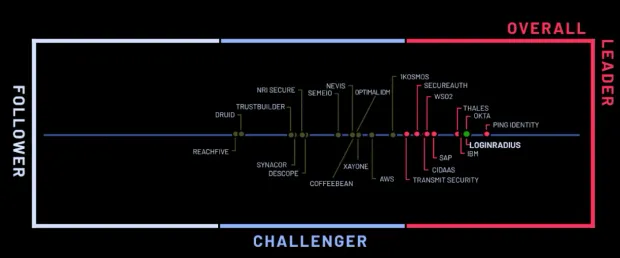
LoginRadius complements workforce IAM platforms by addressing external identity use cases that workforce tools are not designed to manage.
Workforce IAM and CIAM Together
Modern identity architectures increasingly combine:
-
Workforce IAM for employees and administrators
-
CIAM for customers and partners
This separation allows each system to operate within its intended scope while reducing complexity and long-term risk.
Conclusion: Choosing the Right Workforce IAM Alternative
SecureAuth remains a capable option for organizations prioritizing adaptive authentication and risk-based access policies. However, alternatives such as Microsoft Entra ID, Okta, Ping Identity, SailPoint, Saviynt, Cisco Duo, CyberArk Identity, ManageEngine AD360, and IBM Security Verify offer broader workforce IAM capabilities better suited to governance, lifecycle, and scale.
Choosing the right workforce IAM platform depends on how broadly your identity strategy must span across authentication, governance, and lifecycle needs.
For organizations whose identity challenges extend beyond internal users into customer and partner ecosystems, a dedicated CIAM platform like LoginRadius becomes a necessary complement—not a replacement—to workforce IAM.