Customer identity for B2B SaaS has evolved beyond simple SSO integrations. Today’s platforms must handle multi-tenant organization modeling, enterprise SAML connections, SCIM provisioning, audit logs, adaptive MFA, and global scale — all without slowing product teams down.
WorkOS has emerged as a developer-focused identity platform helping SaaS companies quickly add enterprise features like SSO, directory sync, and audit logs. For early-stage and growth-stage SaaS platforms, WorkOS can accelerate enterprise deal cycles by abstracting complex SAML integrations.
However, as SaaS companies scale, expand internationally, or move into broader CIAM use cases, many teams begin evaluating WorkOS alternatives. Common triggers include deeper CIAM requirements, native authentication flows, B2C support, passwordless coverage, advanced MFA, and full tenant lifecycle management.
In this guide, we evaluate the top WorkOS competitors and explain how to choose the right CIAM platform for modern B2B and hybrid identity strategies.
Evaluation Criteria: What Makes a Great CIAM Platform
When evaluating alternatives to WorkOS, it’s important to distinguish between enterprise feature enablement and a full customer identity platform.
Use Case Fit: CIAM vs B2B SaaS vs Workforce IAM
WorkOS focuses heavily on:
-
Enterprise SSO (SAML/OIDC abstraction)
-
Directory sync (SCIM)
-
Audit logging
-
Fine-grained authorization
That works well for SaaS vendors closing enterprise customers. However, many platforms require:
-
Built-in authentication (password, passwordless, MFA)
-
Consumer-scale login flows
-
Progressive profiling
-
Multi-tenant B2B modeling
-
Hybrid B2C + B2B identity
A comprehensive CIAM platform must support both enterprise SSO and broader customer lifecycle management.
Security & User Experience
Modern CIAM demands:
-
Passwordless and passkeys
-
Adaptive MFA
-
Risk-based authentication
-
Bot detection
-
Breach monitoring
-
Branded, customizable login journeys
WorkOS abstracts enterprise authentication, but many UX and adaptive security layers require additional engineering or integration with other providers.
Architecture & Scalability
At scale, identity must provide:
-
Global multi-region availability
-
SLA-backed uptime
-
Elastic performance during spikes
-
Tenant isolation for B2B SaaS
-
API-first architecture
SaaS companies serving hundreds of enterprise tenants often outgrow identity tools that focus narrowly on SAML abstraction.
Data Residency & Compliance
Enterprise buyers increasingly require:
-
Region-specific data hosting
-
SOC 2, ISO, GDPR alignment
-
Privacy controls
-
Audit-ready identity trails
CIAM platforms must support regional hosting and flexible compliance configurations.
Developer Experience & Integration Effort
WorkOS is highly developer-centric. But organizations evaluating alternatives often consider:
-
Depth of SDK coverage
-
No-code flow builders
-
Terraform/CI-CD support
-
Migration tooling
-
Prebuilt authentication templates
-
Full identity lifecycle APIs
As products mature, teams seek platforms that reduce ongoing engineering maintenance.
Top 7 WorkOS Alternatives
Below are the strongest alternatives for teams evaluating WorkOS in 2026.
1. LoginRadius – Best for Full CIAM + Built-In B2B Identity
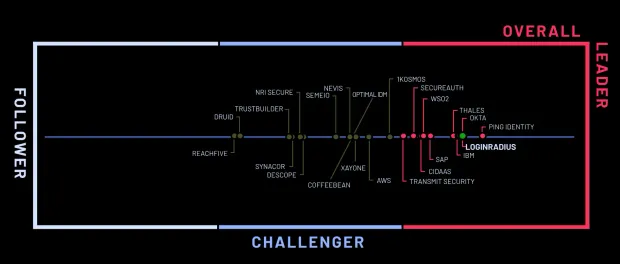
LoginRadius is a purpose-built CIAM platform designed for both B2C and B2B SaaS environments.
Where it works well
-
Native enterprise SSO (SAML, OIDC) and SCIM provisioning
-
Built-in multi-tenant B2B organization modeling
-
Passwordless, passkeys, adaptive MFA, and social login
-
No-code orchestration builder for login journeys
-
SLA-backed global infrastructure
Unlike WorkOS, LoginRadius provides the entire authentication stack — not just enterprise feature abstraction. This allows SaaS platforms to manage both enterprise customers and individual users within a unified identity layer.
2. Auth0 – Best for Developer-Centric CIAM
Auth0 is a widely adopted CIAM solution.
Where it works well
-
Flexible extensibility via Actions and Rules
-
Strong B2B SSO support
-
Large integration marketplace
-
Good hybrid B2C + B2B capabilities
Where it can fall short
-
Pricing increases with MAUs and enterprise features
-
Complex configuration for advanced B2B tenant modeling
3. Okta – Best for Enterprise Identity Ecosystems
Okta offers both workforce IAM and customer identity solutions.
Where it works well
-
Enterprise-grade SSO and federation
-
Deep compliance posture
-
Strong enterprise brand trust
Where it can fall short
-
Workforce-first orientation
-
Higher operational overhead for SaaS teams
4. Azure Entra ID – Best for Microsoft-Centric SaaS
Microsoft Entra ID integrates deeply with Azure.
Where it works well
-
Conditional access policies
-
Azure-native logging and RBAC
-
Strong workforce IAM
Where it can fall short
-
Limited native B2B SaaS tenant lifecycle tools
-
Complex CIAM flow customization
5. Amazon Cognito – Best for AWS-Native SaaS
Amazon Cognito provides user pools and authentication APIs.
Where it works well
-
Cost-effective
-
Deep AWS integration
-
Basic authentication flows
Where it can fall short
-
Limited enterprise SSO abstraction
-
Requires custom engineering for B2B SaaS modeling
6. Stytch – Best for Passwordless-First Apps
Stytch focuses on modern authentication APIs.
Where it works well
-
Passwordless APIs
-
Developer-friendly integration
-
Lightweight implementation
Where it can fall short
-
Limited full CIAM breadth
-
Less mature B2B tenant management
7. Keycloak – Best Open-Source Identity Platform
Keycloak provides open-source IAM capabilities.
Where it works well
-
Full control over deployment
-
Standards-based protocols
-
No licensing costs
Where it can fall short
-
Self-managed scaling
-
Operational maintenance burden
-
No managed SaaS by default
Why People Switch From WorkOS to LoginRadius
Across B2B SaaS evaluations, several themes consistently emerge.
1. Need for Full Authentication Stack
WorkOS abstracts enterprise SSO and directory sync, but many SaaS platforms eventually require:
-
Native login systems
-
Passwordless support
-
Risk detection
-
Consumer identity capabilities
LoginRadius provides a complete CIAM stack rather than a modular abstraction layer.
2. Multi-Tenant B2B Modeling
As SaaS platforms onboard hundreds of enterprise customers, identity becomes more complex:
-
Tenant-level isolation
-
Admin hierarchies
-
Role-based access
-
Delegated management
LoginRadius offers built-in B2B tenant modeling to reduce engineering overhead.
3. Scalability & Global Infrastructure
Enterprise SaaS products expanding globally need SLA-backed infrastructure and data residency options — beyond basic SSO connectors.
4. Reduced Identity Fragmentation
Using separate vendors for authentication, enterprise SSO, fraud, and authorization increases operational complexity. Many teams prefer a unified CIAM platform.
Compare WorkOS vs LoginRadius in detail to evaluate authentication depth, B2B capabilities, orchestration flexibility, and enterprise scalability.
Conclusion
WorkOS has carved out a strong niche helping SaaS companies quickly add enterprise SSO and directory sync capabilities. For early-stage products closing enterprise deals, that abstraction layer can accelerate growth.
However, as organizations expand into broader CIAM needs — passwordless, adaptive MFA, consumer identity, global scale, and tenant lifecycle management — many teams require a more comprehensive platform.
When evaluating WorkOS alternatives, focus on:
-
Full authentication coverage
-
Multi-tenant B2B modeling
-
Global scalability
-
Developer velocity
-
Total cost of ownership
LoginRadius is purpose-built to support both B2B SaaS and high-volume CIAM environments within a single platform.
If you’re evaluating Transmit Security competitors, our team can:
-
Map your CIAM requirements
-
Review architecture trade-offs
-
Demonstrate migration pathways
-
Provide a tailored technical walkthrough
Explore our documentation or schedule a technical consultation with our identity architects to determine whether LoginRadius aligns with your long-term customer identity roadmap.