Customer identity has moved decisively toward cloud-native, API-first, and experience-driven architectures. Organizations building digital products now expect elastic scalability, passwordless authentication, adaptive MFA, and seamless multi-tenant identity — all without multi-quarter deployment cycles.
WSO2 has long been recognized for its open-source identity and integration heritage. Its Identity Server and API Manager products are frequently adopted by enterprises seeking deep customization, hybrid deployment flexibility, and standards-based IAM.
However, as CIAM (Customer Identity and Access Management) initiatives accelerate, many organizations evaluating WSO2 discover friction points: operational overhead, self-managed infrastructure complexity, slower implementation timelines, and higher engineering dependency. This is often where teams begin exploring WSO2 alternatives that offer cloud-managed CIAM, faster deployment, and simplified customer identity orchestration.
In this guide, we evaluate the top WSO2 competitors across modern CIAM criteria and outline why many teams ultimately shortlist LoginRadius when modernizing their customer identity stack.
Evaluation Criteria: What Makes a Great CIAM Platform
When comparing alternatives to WSO2, it’s important to evaluate through a CIAM-specific lens rather than traditional enterprise IAM metrics.
Use Case Fit: CIAM vs Workforce IAM vs Hybrid Identity
WSO2 is highly flexible and can support workforce IAM, API security, and customer identity use cases. But flexibility often comes at the cost of complexity.
Modern CIAM deployments typically require:
-
High-volume B2C authentication
-
Multi-tenant B2B SaaS modeling
-
Progressive profiling and dynamic onboarding
-
API-first identity integration
-
Low-latency global performance
Platforms purpose-built for CIAM often reduce architectural overhead compared to integration-centric IAM frameworks.
Security & User Experience
Today’s CIAM platforms must balance robust security with frictionless user experiences:
-
Passwordless authentication and passkeys
-
Adaptive MFA
-
Risk-based authentication
-
Bot mitigation
-
Breach password detection
-
Device intelligence
WSO2 supports strong standards (OAuth, OIDC, SAML), but building advanced UX flows and adaptive risk logic frequently requires customization and in-house engineering.
Architecture & Cloud-Native Design
Key architectural considerations include:
-
Fully managed cloud vs self-hosted deployments
-
Multi-region scalability
-
SLA-backed uptime
-
Horizontal scaling
-
Tenant isolation for B2B SaaS
WSO2 is often deployed in self-managed or hybrid environments, which can increase operational burden for teams seeking cloud simplicity.
Data Residency & Compliance
Regulated industries need:
-
Region-specific hosting
-
GDPR, SOC 2, ISO alignment
-
Healthcare and financial compliance options
-
Strong audit logging
Cloud-native CIAM vendors typically offer clearer managed compliance pathways compared to self-managed open-source deployments.
Developer Experience & Integration Effort
Developer velocity is critical. Teams prioritize:
-
Well-documented APIs
-
SDKs across languages
-
CI/CD compatibility
-
Terraform support
-
Sandbox environments
-
Migration tooling
While WSO2 provides deep customization, it often requires specialized IAM expertise, which can slow product teams.
Top 7 WSO2 Alternatives
Below are the strongest alternatives for organizations evaluating WSO2 in 2026.
1. LoginRadius – Best for Cloud-Native Enterprise CIAM
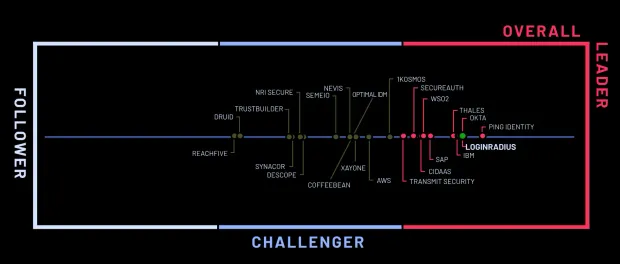
LoginRadius is a purpose-built CIAM platform designed for both B2C and B2B SaaS environments.
Where it works well
-
Native enterprise SSO (SAML, OIDC) and SCIM provisioning
-
Built-in multi-tenant B2B organization modeling
-
Passwordless, passkeys, adaptive MFA, and social login
-
No-code orchestration builder for login journeys
-
SLA-backed global infrastructure
Unlike WorkOS, LoginRadius provides the entire authentication stack — not just enterprise feature abstraction. This allows SaaS platforms to manage both enterprise customers and individual users within a unified identity layer.
2. Auth0 – Best for Developer-Centric CIAM
Auth0 offers flexible customer identity capabilities.
Where it works well
-
Extensive SDKs and integrations
-
Customizable authentication logic
-
Strong hybrid B2C and B2B support
-
Marketplace ecosystem
Where it can fall short
-
Pricing scales with MAUs and advanced features
-
Complex B2B tenant modeling may require additional logic
3. Okta – Best for Enterprise IAM Ecosystems
Okta provides both workforce and customer identity solutions.
Where it works well
-
Enterprise SSO and federation
-
Strong compliance posture
-
Mature enterprise integrations
Where it can fall short
-
Workforce-first design
-
CIAM flows may require customization
-
Higher operational complexity
4. ForgeRock – Best for Hybrid & Regulated Enterprises
ForgeRock is often chosen by large financial institutions.
Where it works well
-
Advanced orchestration
-
Hybrid and on-prem support
-
Fine-grained authorization
Where it can fall short
-
Lengthy deployments
-
High engineering requirements
-
Elevated total cost of ownership
5. Microsoft Entra ID – Best for Microsoft-Centric Environments
Microsoft Entra ID integrates deeply with Azure ecosystems.
Where it works well
-
Conditional access policies
-
Azure-native governance
-
Workforce IAM strength
Where it can fall short
-
Limited native CIAM depth
-
Complex consumer journey customization
6. Amazon Cognito – Best for AWS-Integrated Applications
Amazon Cognito provides authentication within AWS.
Where it works well
-
Low cost
-
Native AWS integrations
-
Basic login flows
Where it can fall short
-
Limited built-in CIAM features
-
Requires heavy customization for B2B SaaS
-
No integrated fraud orchestration
7. Keycloak – Best Open-Source IAM Platform
Keycloak is a popular open-source IAM solution.
Where it works well
-
Full deployment control
-
Standards-based protocols
-
No licensing fees
Where it can fall short
-
Requires self-managed scaling
-
Operational maintenance overhead
-
No native managed SaaS offering
Why People Switch From WSO2 to LoginRadius
Across enterprise evaluations, several patterns consistently emerge.
1. Operational Overhead
WSO2 often requires:
-
Infrastructure management
-
Patch management
-
Upgrade planning
-
DevOps oversight
Organizations seeking managed CIAM platforms reduce operational burden by migrating to LoginRadius.
2. Faster Deployment Cycles
WSO2 implementations frequently involve extended customization and integration work. This can delay digital product launches.
LoginRadius enables faster go-live timelines with prebuilt flows and managed infrastructure.
3. Modern Authentication Expectations
As passwordless and adaptive MFA become standard, teams prefer platforms where these capabilities are built-in rather than custom-built.
4. Total Cost of Ownership
Self-managed open-source platforms can appear cost-effective upfront, but long-term engineering, DevOps, and maintenance costs often increase TCO.
Compare WSO2 vs LoginRadius in detail to evaluate CIAM specialization, cloud-native design, passwordless support, B2B modeling, and operational simplicity.
Conclusion
WSO2 remains a powerful and flexible IAM platform, particularly for organizations requiring deep customization or hybrid deployment.
However, as CIAM strategies evolve toward cloud-native, experience-driven identity, many teams seek:
-
Faster deployment
-
Lower operational overhead
-
Built-in passwordless and adaptive security
-
Multi-tenant B2B capabilities
-
SLA-backed global infrastructure
LoginRadius is purpose-built for customer identity at scale. We help organizations modernize their identity stack without the operational complexity of self-managed IAM.
If you’re evaluating WSO2 alternatives, our team can:
-
Review your current IAM architecture
-
Map CIAM migration strategies
-
Demonstrate B2B and consumer identity flows
-
Provide a tailored technical walkthrough
Explore our documentation or schedule a technical consultation to determine whether LoginRadius aligns with your customer identity roadmap.