
Identity Governance & Lifecycle for Agentic IAM
AI agents don’t log in like humans—they run continuously, act at machine speed, and can drive real business outcomes. That’s why Agentic IAM must treat agents as first-class principals, enforce tightly scoped access, and provide auditable proof that every action was authorized and accountable.

What is Identity Governance & Lifecycle
(in an Agentic IAM context)?
Identity Governance & Administration (IGA) is how you control who (or what) has access to what, ensuring the right access is granted at the right time—and removed when it’s no longer justified. In practice, governance runs across the full identity lifecycle: create, assign access, review/change access, disable, and retire identities—while meeting audit and compliance needs.
In Agentic IAM, the “identity” isn’t always a person. You’re governing non-human identities (agents) that act on behalf of users, teams, or systems, so lifecycle discipline becomes your main safety rail.
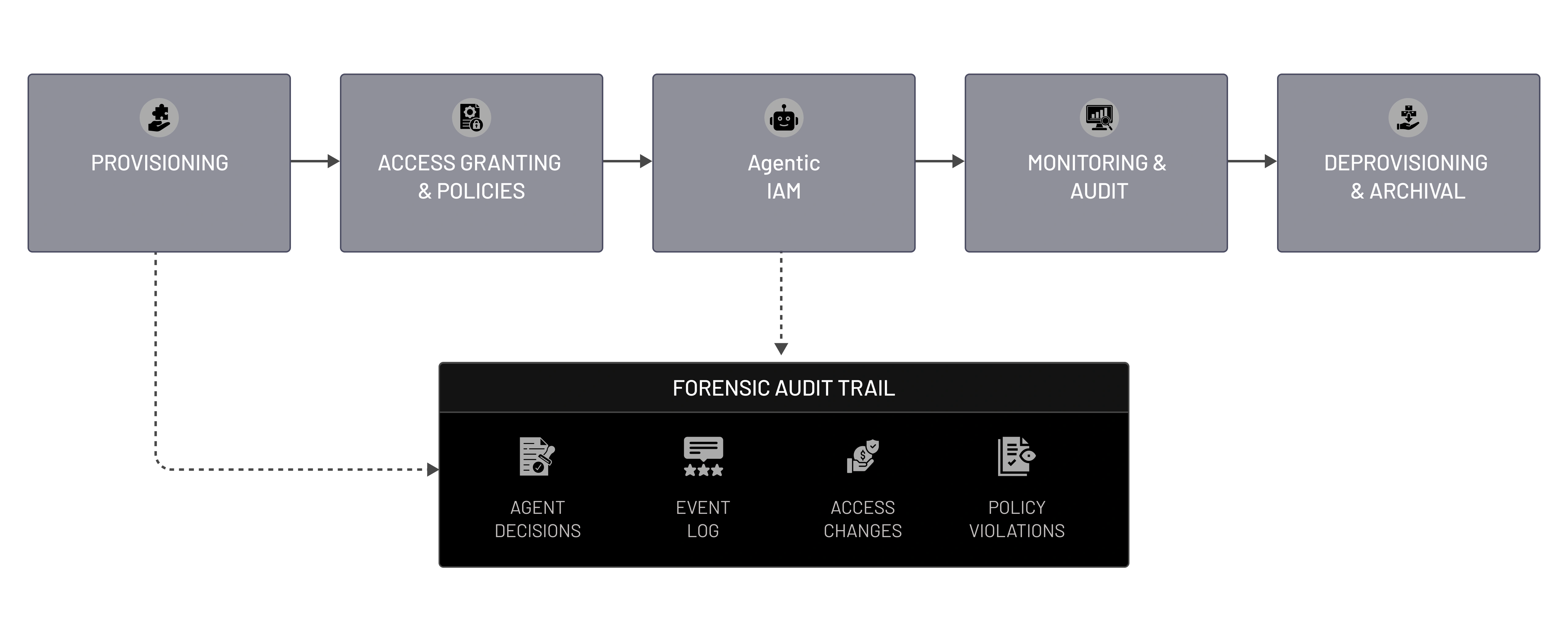
Core Capabilities of Agentic Identity Governance & Lifecycle
 Roles & Permissions (RBAC)Roles & Permissions (RBAC)
 Lifecycle GovernanceLifecycle Governance
 Data Auditing & LoggingData Auditing & Logging
 User / Account Audit LogsUser / Account Audit Logs
 Admin / Team Audit TrailsAdmin / Team Audit Trails
Identity Governance Maturity Models for AI Agents

Static Agent Identity Management
Agents are issued long-lived identities with fixed permissions. Lifecycle changes are manual, and access is trusted once assigned.This model supports early experimentation but becomes risky as agent count and sensitivity increase.
Managed Agent Lifecycle Controls
Agent identities follow defined lifecycle stages with scoped roles and standardized workflows. Access is centrally managed and periodically reviewed.This approach improves control and visibility for early production deployments.
Policy-Driven Agent Identity Governance
Agent identities and access are governed continuously by policy. Permissions are ephemeral, lifecycle actions are automated, and all activity is auditable.This model enables secure, scalable agent operations in regulated and high-risk environments.