Intent-Based Authorization – What, How, Why, When
In Agentic IAM, where autonomous agents act continuously across systems, static authorization models fall short. Intent-based authorization introduces policy intelligence that evaluates context, purpose, risk, and constraints in real time—ensuring agents receive just enough access, only when needed.
What Is Intent-Based Authorization in Agentic IAM?
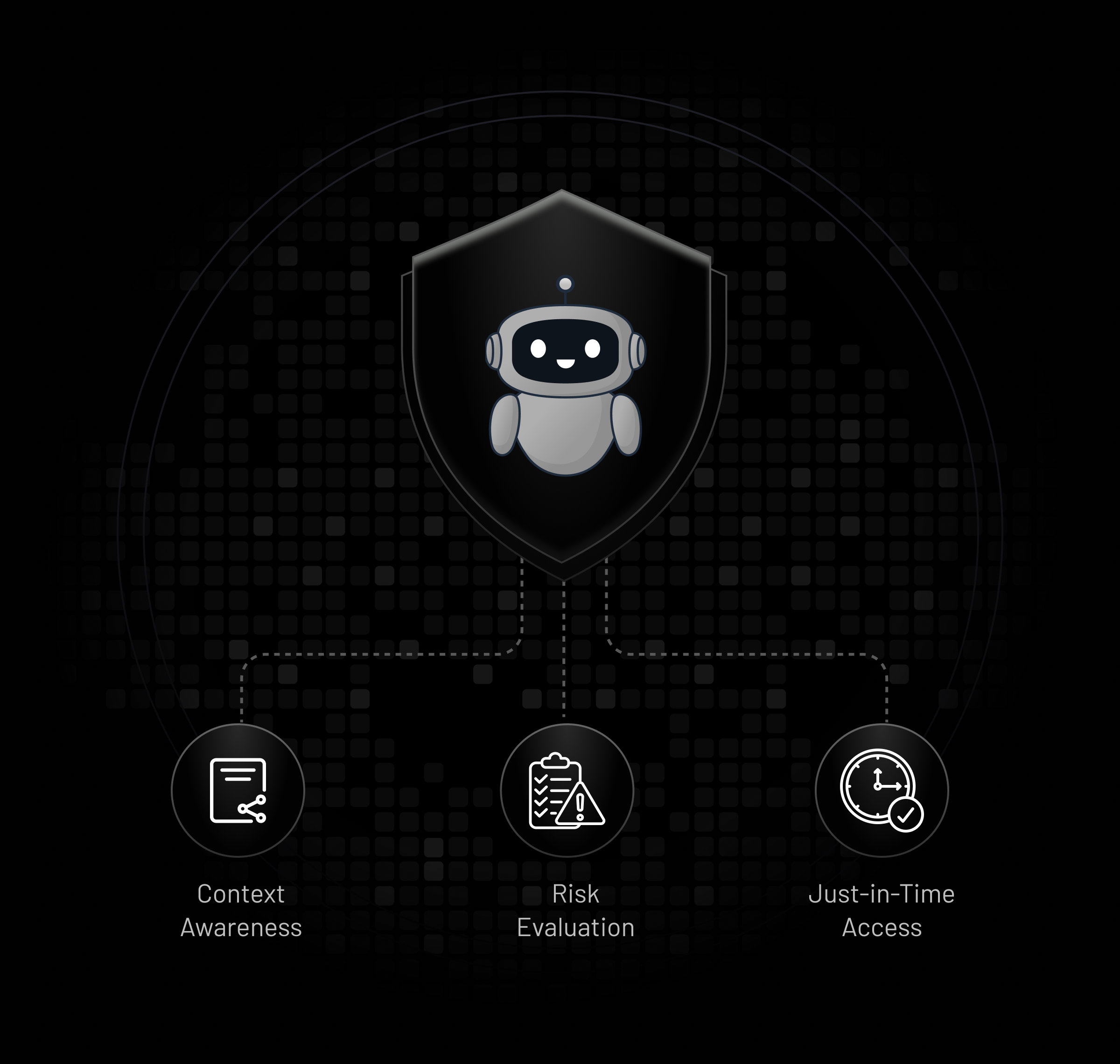
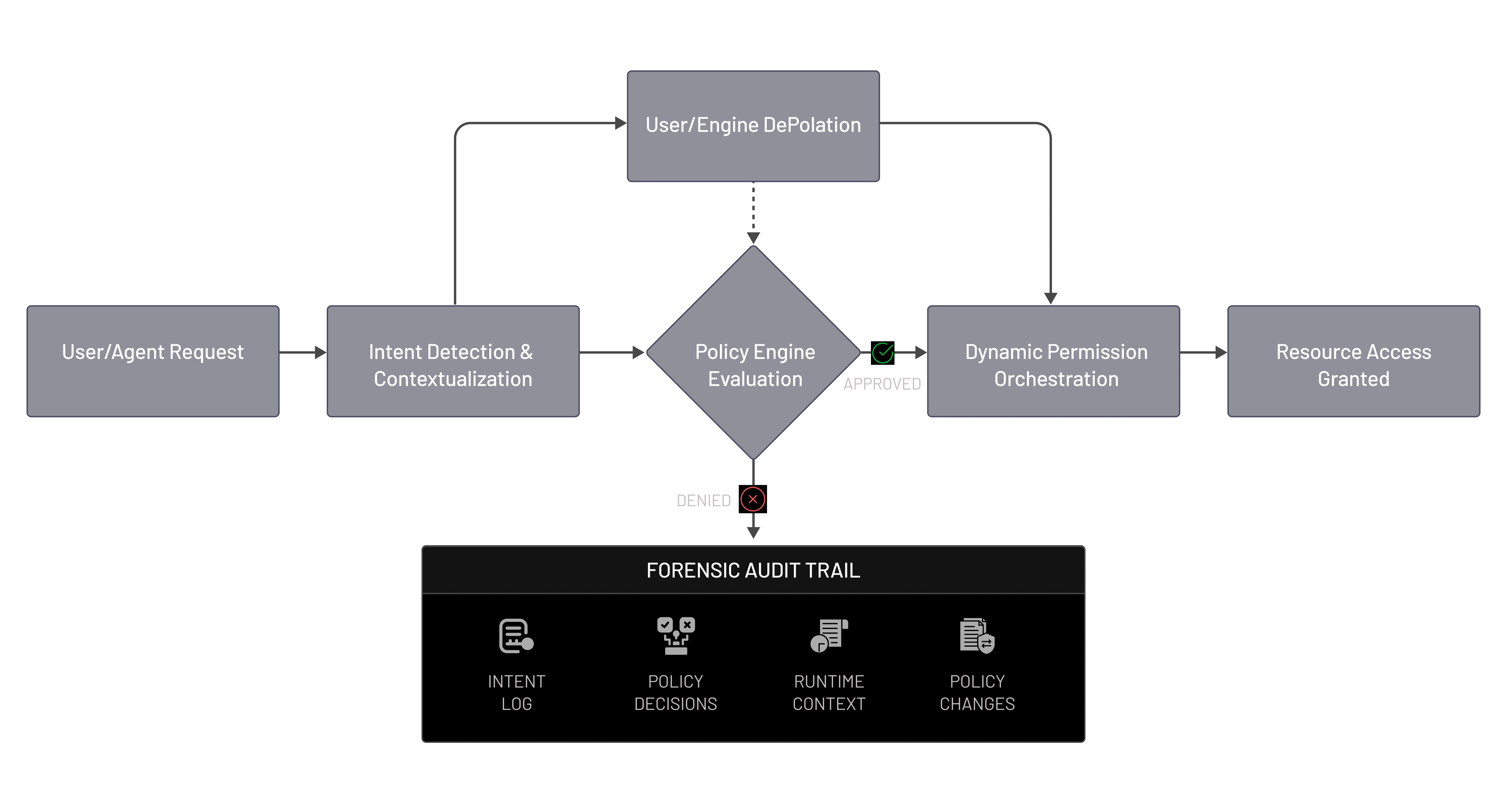
Intent-Based Authorization shifts access decisions from fixed roles to intent, context, and policy logic. In agentic systems, identities extend beyond users to include agents, services, and automations, with every action evaluated based on intent, task scope, context, and active policies—enabling fine-grained, adaptive access control with strong governance and auditability.
Core Pillars of Intent-Based Authorization
Authorization Pillar
What It Covers
Why It Matters
 Advanced Authorization Models
What It Covers
Transition from RBAC to ABAC/PBAC, contextual attributes, and policy-driven access decisions.
Why It Matters
Enables precise control for agents whose permissions cannot be predefined by static roles.
Advanced Authorization ModelsTransition from RBAC to ABAC/PBAC, contextual attributes, and policy-driven access decisions.
Enables precise control for agents whose permissions cannot be predefined by static roles.
 Intent Logic & Policy Semantics
What It Covers
Expression of “why” an action is requested, mapped to allowable outcomes.
Why It Matters
Prevents over-privileged access by aligning permissions with declared purpose.
Intent Logic & Policy SemanticsExpression of “why” an action is requested, mapped to allowable outcomes.
Prevents over-privileged access by aligning permissions with declared purpose.
 Just-Enough-Access Enforcement
What It Covers
Time-bound, scope-limited, and task-specific permissions.
Why It Matters
Reduces blast radius and limits long-lived or excessive agent privileges.
Just-Enough-Access EnforcementTime-bound, scope-limited, and task-specific permissions.
Reduces blast radius and limits long-lived or excessive agent privileges.
 Runtime Policy Evaluation
What It Covers
Real-time authorization decisions based on live signals and constraints.
Why It Matters
Ensures access adapts to changing conditions, risk, and execution context.
Runtime Policy EvaluationReal-time authorization decisions based on live signals and constraints.
Ensures access adapts to changing conditions, risk, and execution context.
 Policy Auditability & Governance
What It Covers
Policy versioning, evaluation logs, and decision traceability.
Why It Matters
Provides accountability, explainability, and compliance readiness.
Policy Auditability & GovernancePolicy versioning, evaluation logs, and decision traceability.
Provides accountability, explainability, and compliance readiness.
Why Static Authorization Fails in Agent-driven Environments

Role-Based Access (RBAC)
Legacy RBAC relies on predefined roles that quickly explode in number as agent behaviors diversify. This leads to coarse permissions and unmanaged privilege creep.
Attribute-Based Access (ABAC) Alone
ABAC improves flexibility but still focuses on who and what, not why. Without intent, policies remain incomplete for autonomous decision-making.
Intent-Driven Authorization
Intent-based models evaluate purpose, context, and constraints together. Access is granted for a specific outcome, within defined boundaries, and revoked automatically when the intent no longer applies.