
Introduction
In the modern digital ecosystem, the build-versus-buy debate has largely settled itself. Speed, scale, and security now come from assembling best-in-class services rather than building everything from scratch.
Authentication is one of the clearest examples of this shift. Most serious applications today rely on third party APIs for identity, access, and security not because they lack expertise, but because the stakes are too high to get wrong.
Yet this reliance creates an uncomfortable reality. Authentication becomes mission-critical infrastructure, but visibility into how it behaves often disappears the moment it leaves your codebase.
Teams deploy an authentication API, confirm that login works, and move on. Performance, consumption patterns, and error behavior fade into the background until something breaks.
That gap between dependency and visibility is exactly where API analytics becomes non-negotiable.
Authentication API Analytics exists to close that gap. It transforms identity from an assumed dependency into a measurable, optimizable system. And for organizations operating at scale, that shift changes how performance, security, and business decisions intersect.
API Authentication Is Invisible Until It Breaks
Authentication rarely announces itself when things go wrong. It degrades quietly.
Login times creep upward. Error rates rise just enough to frustrate users but not enough to trigger alarms. API calls spike during peak traffic, but no one notices until costs jump or conversion drops.
By the time leadership asks why sign-ups slowed or support tickets exploded, the damage has already spread.
This happens because api authentication layers often operate outside day-to-day observability. Teams trust them to work, assume they scale, and only revisit them during incidents. Without intentional api analytics, authentication remains a black box despite being the gateway to every digital interaction.
And here’s the uncomfortable part: many teams don’t realize they’re flying blind.
They track front-end metrics obsessively. They monitor databases, caches, and application servers. But the authentication api the system that decides whether users can even enter often gets reduced to a simple success/failure check.
That approach does not hold up in modern environments where identity traffic fluctuates constantly, integrations multiply, and user expectations remain unforgiving.
Authentication API Analytics answers the questions teams eventually get forced to ask under pressure:
-
How are our authentication APIs performing in real usage?
-
Where do failures actually originate?
-
Which identity flows consume the most resources?
-
What does user behavior look like at the API level?
If these questions feel uncomfortable, that’s the point.
They expose blind spots that only data can resolve.
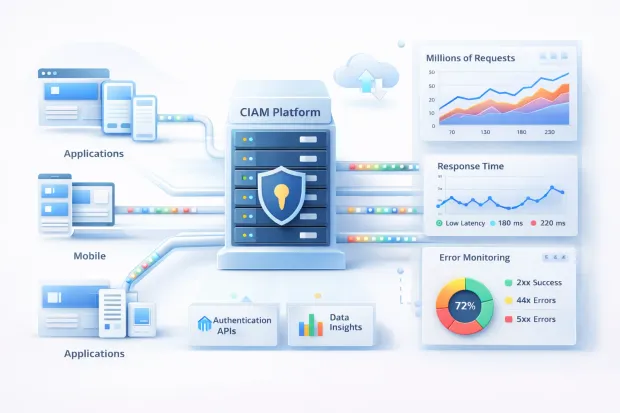
Why API Analytics Matters When Authentication Is Outsourced
Modern enterprises do not outsource authentication casually. They do it because identity systems demand deep expertise in security, compliance, scalability, and reliability. CIAM platforms exist to shoulder that burden.
But outsourcing does not eliminate responsibility. It shifts it.
When authentication relies on third party apis, organizations still own the user experience, the business outcomes, and the operational risk. What changes is where insight must come from.
Without api performance visibility, teams end up guessing:
-
Is login latency caused by our app or the identity provider?
-
Are certain flows generating excessive API calls?
-
Do spikes in authentication traffic correlate with business events?
-
Are error responses isolated or systemic?
Guessing does not scale. It delays decisions and erodes trust between technical teams and leadership.
This is where api analytics stops being a developer convenience and becomes a governance requirement.
Authentication API Analytics provides a structured way to observe how identity services behave inside real applications not in isolation, not in theory, but under live conditions. It gives teams the ability to measure what they depend on rather than assume it behaves.
LoginRadius built this capability with a clear understanding: authentication is not a background service. It is a dependency layer that touches every user, every session, and every business transaction.
What Is Authentication API Analytics by LoginRadius?
Authentication API Analytics is a purpose-built analytics capability designed to evaluate requests made to LoginRadius APIs and translate that activity into actionable insight. It focuses on consumption and performance, not abstract metrics.
Unlike generic monitoring tools that treat identity endpoints like any other HTTP service, this analytics layer understands identity flows. It knows the difference between authentication, profile access, updates, and deletions. That context matters.
The system provides visual reports that allow teams to:
-
Measure how identity interactions affect overall app performance
-
Analyze how users engage with authentication APIs
-
Review trends across defined time windows, up to 30 days
This matters because identity traffic is not static. Login patterns change with campaigns, launches, regional growth, and seasonal usage. Without windowed analytics, those patterns remain invisible.
Authentication API Analytics does not overwhelm teams with raw logs. It organizes data into meaningful views that connect technical signals to business relevance.
For directors and analytics leaders, that clarity is the difference between reactive troubleshooting and informed decision-making.
The Three API Analytics Dimensions That Actually Matter
Raw data does not create insight. Structure does.
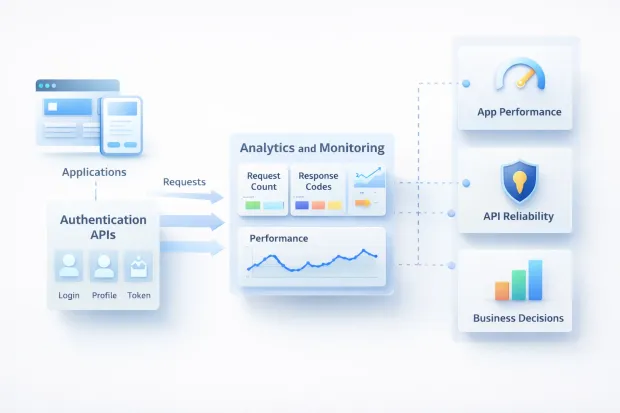
Authentication API Analytics organizes identity data into three core dimensions: request count, response codes, and performance. Each dimension answers a different operational question, and together they form a complete picture of identity behavior.
Request Count: Understanding Real API Consumption
Request count analytics show how frequently different LoginRadius APIs are called across your application. This includes CRUD operations tied to authentication and profile management.
At first glance, request volume may seem like a simple metric. In practice, it reveals patterns that teams often miss.
Request count exposes which identity features users actually engage with. It highlights which authentication flows dominate traffic. It surfaces inefficient usage patterns that inflate costs or strain infrastructure.
For analytics leaders, this data becomes a proxy for user behavior at the identity layer. Instead of relying on assumptions about how authentication works in practice, teams see exactly how it gets used.
Over time, request count trends inform business decisions. Spikes may align with marketing campaigns. Drops may correlate with friction in onboarding. Unbalanced usage across APIs can signal architectural inefficiencies.
This is where identity data stops being operational noise and starts shaping strategy.
Response Codes: Finding Errors Before Users Do
Error handling often tells a clearer story than success metrics.
Authentication API Analytics tracks HTTP response codes across identity requests, breaking them into success responses and error categories. This distinction matters more than most teams expect.
Client-side errors (4xx) reveal where API requests fail due to incorrect usage, missing parameters, or integration issues. These errors often originate in application logic and directly affect user experience.
Server-side errors (5xx) indicate how the LoginRadius infrastructure responds to valid requests under load. Monitoring these responses provides confidence in platform reliability and helps teams distinguish internal issues from external ones.
Tracking response codes over time allows teams to spot patterns long before they escalate into incidents. A gradual increase in 4xx errors may signal an integration change gone wrong. A sudden rise in 5xx responses demands immediate attention.
The value here lies in accountability. Teams know where to focus. Conversations shift from blame to resolution.
Performance Analysis: Measuring Authentication Speed Where It Counts
Speed remains one of the most underestimated features in authentication.
Authentication API Analytics provides response time data for key identity operations, including authentication APIs, profile lookup, creation, update, and deletion. This granularity matters because not all identity operations behave the same under load.
Authentication latency directly affects login success rates and user satisfaction. Profile operations influence personalization and account management flows. Without performance analytics, teams often treat identity as uniformly fast or slow when the reality is more nuanced.
Performance trends highlight whether response times remain consistent during peak usage. They show whether optimizations work. They expose whether certain identity flows introduce friction that users feel immediately.
For organizations that care about app performance as a competitive advantage, ignoring authentication latency is no longer acceptable.
How Authentication API Analytics Improves App and Business Performance
The strongest analytics systems do not live in silos. They connect technical behavior to business outcomes.
Authentication API Analytics does exactly that.
From a development perspective, teams gain confidence that authentication behaves as designed under real conditions. They no longer rely on synthetic tests or assumptions. Performance becomes measurable.
From an application standpoint, identity stops being a vague dependency and becomes a monitored system. Bottlenecks surface. Inefficiencies reveal themselves. Improvements show measurable impact.
From a business perspective, authentication data informs decisions grounded in reality. API consumption patterns reflect user behavior. Performance trends correlate with conversion and retention. Errors expose friction points that undermine growth.
This is where analytics moves beyond reporting and starts influencing direction.
Why LoginRadius Is Uniquely Positioned to Deliver This Level of Insight
Not all api analytics tools understand identity.
Generic monitoring platforms treat authentication endpoints like any other service. They count requests, track latency, and log errors but they miss context. They do not understand identity flows, authentication semantics, or CIAM-specific behavior.
LoginRadius does.
As a cloud-based CIAM provider serving thousands of businesses and over a billion users monthly, LoginRadius designs analytics for identity at scale. The platform operates in environments where authentication traffic peaks unpredictably and reliability remains non-negotiable.
Authentication API Analytics reflects that experience. It focuses on the metrics that matter for identity systems, not vanity indicators.
For directors and analytics experts evaluating identity infrastructure, this distinction matters. Expertise shows up in what a platform chooses to measure and how it presents that data.

Conclusion
Authentication sits at the front door of every digital experience, yet for many organizations, it remains one of the least measured systems in the stack. Teams trust it to work, assume it scales, and only investigate when something visibly breaks. That gap between trust and visibility is where performance issues grow quietly and where business impact often shows up too late.
Authentication API Analytics changes that dynamic. It brings authentication out of the shadows and into the same analytical discipline applied to applications, infrastructure, and revenue-driving systems.
Instead of guessing how identity services behave, teams see real request patterns. Instead of reacting to login failures, they spot error trends early. Instead of assuming performance holds under pressure, they measure response times where it actually matters.
What makes this especially powerful is the connection between technical signals and business decisions. API consumption data reflects real user behavior. Response codes expose friction points before customers complain. Performance trends reveal whether identity supports growth or quietly slows it down.
This is not abstract reporting it’s operational intelligence that informs product, engineering, and leadership conversations with the same source of truth.
LoginRadius approaches authentication analytics from the perspective of scale and responsibility. Serving billions of identity interactions requires more than uptime guarantees; it demands visibility, accountability, and clarity. Authentication API Analytics reflects that experience. It focuses on what identity teams actually need to know, not just what’s easy to measure.
If your organization relies on third-party authentication APIs and most modern ones do then understanding how those APIs perform is no longer optional. It’s the difference between managing identity as a cost center and using it as a measurable, optimizable asset.
For directors and analytics leaders who care about performance, reliability, and data-backed decisions, the Authentication API Analytics datasheet goes deeper into how this visibility works in practice.
Download the Authentication API Analytics Datasheet and see how LoginRadius turns identity data into business intelligence.
FAQs
Q: What is Authentication API Analytics?
A: Authentication API Analytics provides visibility into how authentication and identity APIs behave in real usage. It tracks request volume, response codes, and performance so teams understand how identity impacts application and business outcomes.
Q: Why is API analytics important for authentication APIs?
A: Authentication APIs sit at the entry point of every digital experience. Without analytics, teams miss performance issues, hidden errors, and inefficient API consumption that directly affect user experience and business decisions.
Q: How does Authentication API Analytics help improve app performance?
A: It reveals response time trends and request patterns across authentication and profile APIs. Teams use this data to identify bottlenecks, reduce latency, and validate that identity flows scale reliably under real traffic.
Q: Who should use Authentication API Analytics?
A: It’s built for directors, analytics leaders, and technical teams responsible for application performance and identity strategy. Anyone accountable for user experience, reliability, or growth benefits from this level of API visibility.