Frontegg has earned strong traction among SaaS startups and mid-market companies looking to accelerate B2B authentication. Its embedded user management, tenant isolation, and developer-friendly tooling make it appealing for teams that want to move fast without building identity infrastructure from scratch.
However, as organizations scale, identity requirements change. Enterprise buyers begin to ask deeper questions around compliance, adaptive security, regional data residency, operational SLAs, and long-term architectural flexibility. This is where many teams start evaluating alternatives to Frontegg, not because it failed early, but because it wasn’t designed to support enterprise-grade CIAM complexity over time.
In this guide, we break down the top Frontegg alternatives, with a focus on platforms that better support high-scale CIAM, B2B SaaS, partner ecosystems, and regulated industries. We’ll start by outlining what matters most when choosing a CIAM platform, then evaluate leading common alternatives.
Evaluation Criteria: What Makes a Great CIAM Platform
Before comparing Frontegg alternatives, it’s important to clarify what separates a basic authentication service from a true CIAM platform. From our experience working with consumer brands, B2B SaaS companies, and regulated enterprises, five criteria consistently matter most when identity becomes business-critical.
Use Case Fit: CIAM vs Workforce vs B2B Identity
Not all identity platforms are built for the same purpose. Workforce IAM tools focus on employee access, while CIAM platforms must support millions of external users, unpredictable traffic spikes, and seamless onboarding across web and mobile experiences. Increasingly, organizations also need B2B and partner identity capabilities, including tenant isolation, delegated administration, and complex account hierarchies.
Frontegg is well-suited for early-stage and mid-market B2B SaaS products that want to move quickly with embedded authentication and basic tenant management. However, as products evolve to support larger customers, multi-org contracts, and partner ecosystems, teams often encounter limitations around flexibility, scale, and advanced identity modeling.
Security & User Experience: MFA, Passwordless, and Adaptive Controls
Modern CIAM must strike a balance between strong security and low-friction user experiences. Enterprises increasingly expect multiple MFA options, passwordless authentication, and the ability to apply risk-based controls dynamically based on context.
Frontegg covers foundational authentication needs but lacks several enterprise-grade capabilities, such as native push notification MFA and advanced adaptive authentication. Platforms designed specifically for CIAM provide deeper MFA coverage, passkeys, WebAuthn, hardware-backed keys, and step-up authentication without forcing teams to stitch together third-party tools.
Architecture: Cloud-Native Scale, Performance, and SLAs
CIAM platforms sit directly in the critical path of login, registration, and account recovery. That means performance, resilience, and scalability are not optional. Enterprise teams look for cloud-native architectures, proven high-volume performance, and SLA-backed APIs that can handle peak traffic without degradation.
Frontegg performs well for predictable, mid-scale workloads, but organizations with global audiences or high-growth trajectories often require stronger guarantees around uptime, latency, and long-term scalability.
Data Residency & Compliance Readiness
As identity data becomes more regulated, CIAM platforms must support regional data residency, robust privacy controls, and widely recognized certifications such as SOC 2 Type II and ISO 27001. These requirements are especially common in industries like finance, healthcare, government, and enterprise SaaS.
Frontegg’s compliance posture is sufficient for many startups, but enterprises often need a broader set of certifications and clearer residency options to clear security reviews and support international expansion.
Developer Experience & Migration Effort
Finally, a CIAM platform must be usable by the teams implementing and maintaining it. Clear APIs, well-documented SDKs, migration tooling, and responsive support all play a major role in long-term success.
Developer-first platforms like Frontegg prioritize speed to launch, but as identity requirements grow more complex, teams often benefit from CIAM solutions that combine strong developer ergonomics with structured migration support and enterprise-grade services.
Top 7 Frontegg Alternatives to Consider in 2026
Below are seven commonly evaluated alternatives when teams outgrow Firebase for customer identity.
1. LoginRadius
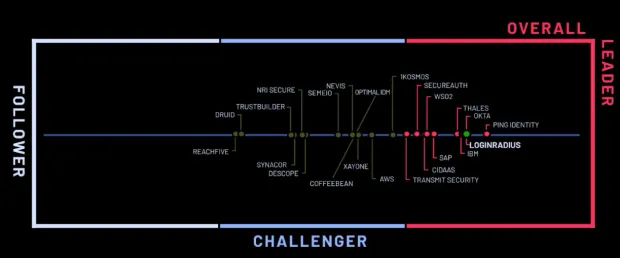
LoginRadius is a CIAM platform designed specifically for high-volume B2C, B2B SaaS, and regulated enterprise identity use cases. Unlike Frontegg, which approaches identity as an embedded product feature for SaaS applications, LoginRadius is purpose-built for customer identity as a core infrastructure layer, designed to scale securely across regions, tenants, and compliance boundaries.
While Frontegg works well for fast-moving startups and mid-market teams, LoginRadius is designed for organizations that need enterprise-grade security controls, compliance readiness, and long-term architectural flexibility without replatforming as identity requirements grow.
Where LoginRadius Works Especially Well
CIAM-native, enterprise-ready architecture: LoginRadius is built from the ground up for customer and partner identity at scale. The platform supports multi-region cloud deployments, geo-isolated data residency, SLA-backed availability, and native multi-tenant organization models. These capabilities are foundational to the platform, not layered on through custom code or product extensions, which is where many teams encounter limits with Frontegg as they scale.
Enterprise MFA and passwordless authentication: LoginRadius provides native support for push notification MFA, adaptive risk-based authentication, passkeys, WebAuthn, hardware-backed keys, OTPs, magic links, and step-up authentication flows. In contrast, Frontegg lacks push-based MFA and advanced adaptive controls, which can become a blocker for enterprises with stricter security requirements.
Compliance-ready by default: LoginRadius comes with SOC 2 Type II, ISO 27001, GDPR, and CCPA compliance built in, along with configurable regional data residency options. This makes it easier for security, legal, and procurement teams to approve identity infrastructure. Frontegg’s compliance posture is typically sufficient for startups but often falls short of enterprise and public-sector expectations.
Proven scalability with SLA-backed APIs: LoginRadius is designed to support millions of identities with predictable performance during traffic spikes such as product launches, seasonal demand, or large enterprise onboardings. APIs are SLA-backed and supported by global infrastructure. Frontegg performs well at mid-scale but lacks the same level of proven enterprise-scale guarantees.
Low-code identity orchestration for faster iteration: Hosted login experiences, configurable workflows, progressive profiling, conditional MFA policies, and theming tools allow teams to evolve authentication and onboarding journeys without continuous engineering effort. This is especially valuable for product and growth teams that need to iterate quickly without rebuilding identity logic.
Enterprise-grade migration and support model: LoginRadius provides structured migration tooling, professional services, and dedicated customer success managers. This contrasts with Frontegg’s lighter support model, which is optimized for smaller teams but can become a limitation during large-scale or regulated deployments.
Ideal For
-
B2B SaaS platforms that need multi-tenant identity, delegated administration, and enterprise security
-
Consumer brands operating at global scale with peak traffic volatility
-
Regulated industries requiring certifications and regional data residency
-
Organizations that expect identity complexity to grow over time and want to avoid replatforming
3. Microsoft Entra External ID
Microsoft Entra External ID (formerly Azure AD B2C) is Microsoft’s customer identity offering, extending workforce IAM concepts into external user scenarios. It is most commonly evaluated by organizations already standardized on Azure infrastructure and Microsoft security tooling.
Where Microsoft Entra External ID Performs Well
-
Microsoft ecosystem alignment: Native integration with Azure services, Entra ID, Conditional Access, and Microsoft security tooling makes it appealing for Azure-first organizations.
-
Enterprise federation support: Strong SAML and OIDC capabilities for enterprise SSO, partner access, and directory federation scenarios.
-
Baseline CIAM coverage: Supports customer authentication, social login, and external identity federation for relatively straightforward customer identity use cases.
CIAM Fit Analysis: Entra External ID works best when customer identity is tightly coupled to Microsoft infrastructure and IT-driven workflows. For consumer-facing or B2B SaaS products that require frequent UX iteration, flexible journey orchestration, or rapid experimentation, policy complexity and limited CIAM-native tooling often become constraints over time.
Ideal For
-
Azure-centric enterprises
-
Organizations with existing Entra ID and Microsoft security investments
-
Low-variation customer identity use cases with limited UX customization needs
Trade-Offs
-
Complex custom policy management
-
Limited consumer-grade UX and journey flexibility
-
Slower iteration driven by IT-heavy governance and change processes
2. Auth0
Auth0 is a developer-first identity platform widely adopted for application authentication and authorization. It is often evaluated as a Frontegg alternative by teams that want greater flexibility, extensibility, and ecosystem support as identity requirements grow.
Where Auth0 Performs Well
-
Strong developer experience: Comprehensive SDKs, APIs, and documentation make it easy for engineering teams to implement and customize authentication flows.
-
Extensive integration ecosystem: Broad marketplace support for identity providers, social login, and third-party services.
-
Flexible protocol support: Robust OAuth, OIDC, and SAML capabilities support a wide range of authentication scenarios.
CIAM Fit Analysis: Auth0 works well for teams that want fine-grained control over authentication logic and are comfortable building custom CIAM workflows. However, for B2B SaaS and enterprise CIAM use cases, core capabilities like multi-tenant administration, advanced MFA, and compliance readiness often require additional configuration, custom development, or higher-tier pricing.
Ideal For
-
Engineering-driven teams that prioritize customization
-
SaaS products with moderate CIAM complexity
-
Organizations comfortable assembling CIAM capabilities incrementally
Trade-Offs
-
Costs can escalate quickly at scale
-
B2B and CIAM-native features require customization
-
Advanced security and compliance features are not always included by default
4. Ping Identity
Ping Identity is a long-established enterprise IAM vendor with strong roots in workforce identity, federation, and access management. It is commonly evaluated by large organizations extending existing IAM investments into customer and partner identity.
Where Ping Identity Performs Well
-
Enterprise-grade federation: Mature SAML, OIDC, and identity federation capabilities for complex enterprise environments.
-
Policy-driven authentication: Strong support for centralized policy enforcement and custom authentication logic.
-
Flexible deployment models: Supports cloud, hybrid, and on-premises architectures.
CIAM Fit Analysis: Ping Identity is best suited for organizations with deep IAM expertise and complex enterprise requirements. While it can support CIAM use cases, implementations are often heavyweight and slower to deploy compared to CIAM-native platforms, making it less ideal for teams prioritizing speed, UX iteration, or developer simplicity.
Ideal For
-
Large enterprises with existing Ping investments
-
Highly regulated industries with complex IAM policies
-
Organizations requiring hybrid or on-prem deployments
Trade-Offs
-
High implementation and operational complexity
-
Longer time-to-value
-
Less product-focused CIAM tooling out of the box
5. Amazon Cognito
Amazon Cognito is AWS’s native identity service for managing authentication in cloud-native applications. It is frequently evaluated by teams already building and deploying on AWS infrastructure.
Where Amazon Cognito Performs Well
-
Tight AWS integration: Native connectivity with AWS services and IAM tooling.
-
Cost-effective entry point: Attractive pricing for basic authentication use cases.
-
Managed infrastructure: Reduces the need to operate identity infrastructure directly.
CIAM Fit Analysis: Cognito works well for straightforward authentication needs within AWS-centric applications. However, for B2B SaaS, complex tenant models, or advanced CIAM requirements, teams often encounter limitations around customization, UX control, and advanced security—requiring significant custom development.
Ideal For
-
AWS-native development teams
-
Simple consumer or internal applications
-
Cost-sensitive projects with limited CIAM scope
Trade-Offs
-
Limited CIAM-native features
-
Basic MFA and passwordless support
-
High engineering effort for advanced use cases
6. ForgeRock
ForgeRock is a powerful identity platform designed for large-scale, security-critical environments. It is commonly used in government, financial services, and highly regulated industries.
Where ForgeRock Performs Well
-
Advanced identity orchestration: Highly configurable authentication and authorization flows.
-
Strong compliance posture: Suitable for regulated environments with strict security requirements.
-
Flexible deployment options: Supports complex architectural needs, including on-premises and private cloud.
CIAM Fit Analysis: ForgeRock excels in environments where identity is mission-critical and heavily regulated. However, its complexity, cost, and operational overhead make it less suitable for organizations seeking fast deployment, iterative UX improvements, or lower total cost of ownership.
Ideal For
-
Large regulated enterprises
-
Government and financial institutions
-
Organizations with dedicated IAM teams
Trade-Offs
-
High cost and implementation effort
-
Longer deployment timelines
-
Significant operational complexity
7. WorkOS
WorkOS simplifies enterprise SSO, directory sync, and compliance for B2B SaaS products. It is often evaluated as a complementary or lightweight alternative to more comprehensive identity platforms.
Where WorkOS Performs Well
-
Fast enterprise SSO enablement: Simplifies SAML, SCIM, and directory integrations.
-
Developer-friendly APIs: Designed to reduce friction when selling to enterprise customers.
-
Clear B2B SaaS focus: Aligns well with SaaS teams adding enterprise features.
CIAM Fit Analysis: WorkOS is not a full CIAM platform. It works best as an add-on for enterprise features rather than a complete identity solution. Teams still need another system to handle core authentication, MFA, and consumer identity flows.
Ideal For
-
B2B SaaS products adding enterprise SSO
-
Teams that already have core authentication in place
-
Products focused primarily on workforce-style access
Trade-Offs
-
Not a standalone CIAM solution
-
Limited authentication and security depth
-
Requires integration with additional identity platforms
Why people switch from Frontegg to LoginRadius
As organizations grow, we consistently see teams reassessing Frontegg when enterprise requirements become unavoidable.
Enterprise-grade MFA options
Frontegg lacks push notification MFA and advanced adaptive authentication. LoginRadius provides native support for push, passkeys, hardware keys, and risk-based MFA, all built into the core platform rather than bolted on later.
Compliance without compromise
Many enterprises require SOC 2 Type II, ISO 27001, GDPR, CCPA, and regional data residency guarantees. Frontegg falls short on several of these enterprise-critical certifications, while LoginRadius delivers them as standard capabilities.
Scalability that grows with you
Frontegg works well for startups and mid-market SaaS teams, but lacks the same level of proven enterprise scalability. LoginRadius is designed for global scale, with SLA-backed APIs and infrastructure that reliably support millions of users.
Enterprise-grade support and migration
Frontegg’s support model is better suited to smaller teams. LoginRadius provides dedicated customer success managers, professional services, and structured migration support to reduce risk during enterprise rollouts.
Frontegg vs LoginRadius: Feature Comparison
| Capability | LoginRadius | Frontegg |
|---|---|---|
| Primary CIAM Focus | Purpose-built CIAM for B2C, B2B SaaS, and enterprises | Embedded auth for startups and mid-market SaaS |
| B2B & Multi-Tenant Identity | Native org hierarchies, roles, delegated admin, partner identity | Basic tenant support; limited enterprise flexibility |
| MFA Depth | Push MFA, adaptive risk-based MFA, passkeys, WebAuthn, hardware keys | OTP-based MFA; no native push or adaptive MFA |
| Passwordless Authentication | Full support (passkeys, WebAuthn, magic links, OTP) | Limited passwordless options |
| Compliance & Certifications | SOC 2 Type II, ISO 27001, GDPR, CCPA | Limited enterprise certifications |
| Data Residency Controls | Regional hosting and geo-isolated deployments | Limited residency options |
| Scalability & SLAs | Enterprise-proven scale with SLA-backed APIs | Optimized for startup and mid-market scale |
| Enterprise Support & Migration | Dedicated CSMs, migration tooling, professional services | Lighter support model |
Conclusion
Frontegg remains a strong option for teams that prioritize speed and simplicity early in their SaaS journey. But as identity requirements expand, across regions, tenants, partners, and regulatory environments, many organizations find its limitations increasingly difficult to work around.
Choosing the right CIAM platform means looking beyond basic authentication. Enterprises need adaptive security, compliance readiness, global scale, and long-term architectural flexibility.
For teams evaluating alternatives to Frontegg, LoginRadius stands out as a CIAM platform purpose-built for enterprise and B2B identity, without forcing trade-offs between security, developer experience, and scale.
If you’re reassessing your identity strategy, our team is happy to help you evaluate whether LoginRadius is the right fit for your current and future needs.