Strivacity has earned recognition as a modern identity orchestration platform, particularly for organizations that want flexible authentication flows and fraud-aware access journeys. Its policy-driven approach, identity proofing capabilities, and focus on secure customer access make it appealing for regulated industries and complex authentication scenarios.
However, as CIAM requirements mature, many teams begin to experience trade-offs. Common friction points include limited out-of-the-box MFA options, configuration overhead for push authentication, constrained orchestration flexibility, and challenges scaling across B2B or multi-tenant use cases. For teams focused on improving login conversion, accelerating implementation, or reducing identity complexity, these gaps often trigger a search for alternatives.
In this guide, we evaluate the top Strivacity alternatives through a CIAM-first lens. We start with LoginRadius, then compare six additional platforms commonly considered by teams looking for stronger MFA coverage, passwordless experiences, and enterprise-grade identity orchestration.
Evaluation Criteria: What Makes a Great CIAM Platform
Before comparing vendors, it’s important to define what “good” looks like for customer identity, not workforce IAM.
Use Case Fit: CIAM vs Workforce vs B2B Identity
A strong CIAM platform is purpose-built for external users at scale. That means supporting millions of logins, unpredictable traffic spikes, and diverse user journeys. Many platforms originated in workforce IAM and later expanded outward, which can introduce UX friction or architectural constraints for consumer and partner use cases.
For B2B SaaS and partner portals, multi-tenant identity, organization hierarchies, and delegated administration are equally critical.
Security & User Experience
Security should not come at the cost of conversion. Best-in-class CIAM platforms provide:
-
Multiple MFA options (push, TOTP, magic links, passkeys)
-
Adaptive and risk-based authentication
-
Fraud detection and anomalous behavior alerts
-
Passwordless journeys that reduce friction without weakening security
Architecture, Scale, and Reliability
CIAM platforms must be cloud-native, horizontally scalable, and backed by SLA-driven APIs. Performance consistency during peak traffic, regional failover, and real-time monitoring are essential for customer-facing applications.
Data Residency & Compliance
Modern identity platforms must support regional data hosting, privacy regulations, and industry certifications. For global brands, data residency flexibility is often a deciding factor.
Developer Experience
Finally, adoption depends heavily on developer experience. Clear documentation, SDK coverage, visual tooling, sandbox environments, and migration support all reduce time-to-value and long-term maintenance costs.
Top 5 Strivacity Alternatives to Consider in 2026
Below are some of the most commonly evaluated alternatives when organizations reassess Strivacity for customer identity and access management (CIAM) use cases.
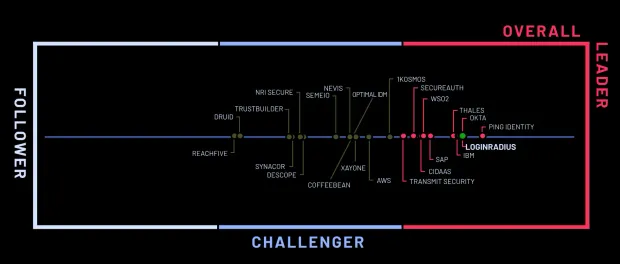
1. LoginRadius
LoginRadius is a CIAM platform purpose-built for high-scale B2C, B2B SaaS, and public-sector identity use cases. Unlike solutions adapted from workforce IAM or narrow identity proofing models, LoginRadius is architected from the ground up to support consumer-scale traffic, flexible authentication journeys, and continuous iteration across diverse customer experiences.
Where LoginRadius Works Especially Well
CIAM-native architecture designed for internet-scale identity: LoginRadius is built specifically for external user identity rather than retrofitted from employee IAM systems. Core capabilities such as global deployment, regional data residency, multi-tenant organizational models, and high-availability SLAs are foundational to the platform. This makes it well suited for organizations managing millions of customer and partner identities across regions, brands, and applications.
Frictionless identity orchestration without heavy custom code: Authentication journeys, including registration, login, MFA, step-up verification, and progressive profiling can be designed and adjusted using low-code and no-code orchestration tools. Teams can dynamically adapt flows based on user context, risk signals, and device posture, reducing unnecessary OTP or PIN challenges without requiring constant engineering cycles.
Broad CIAM feature coverage available out of the box: LoginRadius delivers native support for passwords, OTP, magic links, passkeys (WebAuthn), fully passwordless authentication, social login, adaptive MFA, and enterprise federation. Capabilities such as consent management, profile data governance, and integrations with marketing and analytics platforms are included as core platform features rather than add-ons, simplifying deployment and long-term operations.
Security controls aligned with consumer threat models: Security features, including breached password detection, anomaly and velocity checks, bot mitigation, and DDoS protection are designed specifically for high-volume consumer authentication traffic. This approach allows organizations to maintain strong security without applying workforce-style controls that negatively impact customer experience or conversion rates.
Branding and customization at scale: LoginRadius provides full control over hosted login experiences, theming, and UI customization. Organizations can maintain consistent brand-aligned authentication flows across multiple applications, regions, and customer segments without duplicating implementations or fragmenting user experience.
Ideal For
-
Consumer-facing brands handling high-volume authentication traffic (e.g., retail, media, gaming)
-
B2B SaaS platforms that require multi-tenant identity and delegated administration
-
Public-sector and regulated organizations with regional data residency and compliance requirements
-
Teams focused on improving signup and login conversion while maintaining strong security controls
2. Auth0
Auth0 is a developer-focused identity platform commonly used by product teams building consumer-facing applications and APIs. It is often evaluated as a Simeio alternative by organizations prioritizing speed of development and SDK-driven integration over consulting-led identity programs.
Where Auth0 Performs Well
-
Developer experience and extensibility: Auth0 offers well-documented SDKs, APIs, and extensibility points that make it attractive to engineering teams building modern web and mobile applications.
-
Flexible authentication methods: Supports social login, enterprise federation, passwordless options, and MFA through configurable flows.
-
Broad ecosystem integrations: Integrates with many third-party services, CI/CD pipelines, and application frameworks.
CIAM Fit Analysis: Auth0 can support CIAM use cases, but many advanced capabilities, such as adaptive authentication, B2B tenant modeling, and deep journey orchestration often require custom logic, rules, or additional services. As customer scale increases, teams may encounter pricing and operational complexity that impact long-term CIAM sustainability.
Ideal For
-
Product teams with strong in-house engineering resources
-
Startups and mid-market companies building custom identity flows
-
Organizations prioritizing developer velocity over out-of-the-box CIAM tooling
Trade-Offs
-
Pricing can escalate quickly with scale and feature usage
-
B2B and multi-tenant CIAM models require additional customization
-
Advanced CIAM security and orchestration are not turnkey
3. Ping Identity
Ping Identity is an enterprise IAM platform with strong roots in workforce identity and federation. It is often evaluated as a Strivacity alternative by large organizations that already use Ping for employee IAM and want to extend similar controls to customer or partner access.
Where Ping Identity Performs Well
-
Enterprise-grade security and federation: Ping offers mature SSO, federation, and policy enforcement capabilities that are well suited for complex enterprise environments and hybrid IAM deployments.
-
Broad IAM portfolio: With products spanning access management, directory services, and identity governance, Ping can support large identity programs that span both workforce and external users.
-
Strong compliance posture: Ping is frequently selected by highly regulated enterprises that prioritize formal security controls and alignment with standards.
CIAM Fit Analysis: Ping Identity can support CIAM use cases, but workforce IAM patterns heavily influence its architecture and tooling. Customer authentication journeys often require significant configuration, professional services, or custom development. Teams focused on conversion optimization, rapid UX iteration, or consumer-scale identity may find the platform operationally heavy compared to CIAM-native alternatives.
Ideal For
-
Large enterprises standardizing on a single IAM vendor
-
Organizations with complex federation and legacy IAM requirements
-
Regulated industries with formal compliance-driven identity programs
Trade-Offs
-
CIAM journeys can feel heavyweight and less flexible
-
Longer implementation timelines and higher operational overhead
-
Not optimized for rapid consumer UX experimentation
4. Microsoft Entra ID
Microsoft Entra ID (formerly Azure Active Directory) is primarily a workforce identity platform that also offers external identity capabilities. It is often considered as a Strivacity alternative by organizations deeply embedded in the Microsoft ecosystem.
Where Microsoft Entra ID Performs Well
-
Tight integration with Microsoft ecosystem: Entra ID integrates seamlessly with Microsoft 365, Azure services, and enterprise IT tooling, making it familiar to many IT teams.
-
Baseline security and access controls: Supports MFA, conditional access policies, and directory-based identity management.
-
Operational familiarity: IT teams already managing Entra ID for employees can extend it to limited external identity scenarios with minimal vendor sprawl.
CIAM Fit Analysis: While Entra ID can support basic external identity scenarios, it is not purpose-built for CIAM. Advanced customer journeys, passwordless experiences, and multi-tenant B2B identity models require additional configuration and development. For high-scale consumer applications, teams may encounter UX limitations and architectural constraints.
Ideal For
-
Organizations already standardized on Microsoft identity
-
Internal-facing or low-complexity external portals
-
IT-led identity programs with limited CIAM customization needs
Trade-Offs
-
Limited CIAM-native orchestration and UX flexibility
-
Consumer-scale identity requires workarounds
-
Not optimized for conversion-focused customer journeys
5. Amazon Cognito
Amazon Cognito is a cloud-native identity service tightly integrated with AWS. It is often evaluated as a Strivacity alternative by teams building applications entirely within the AWS ecosystem.
Where Amazon Cognito Performs Well
-
Native AWS integration: Cognito integrates easily with AWS services such as Lambda, API Gateway, and CloudFront.
-
Cost-effective for simple use cases: At smaller scales and lower complexity, Cognito can be an economical option.
-
Scalable infrastructure: Built on AWS infrastructure, Cognito can handle significant authentication volumes.
CIAM Fit Analysis: Cognito supports basic CIAM scenarios but lacks depth in MFA options, passwordless experiences, and identity orchestration. Custom authentication journeys often require Lambda triggers and bespoke logic, increasing maintenance burden as requirements grow.
Ideal For
-
AWS-native application teams
-
Simple consumer authentication needs
-
Cost-sensitive projects with minimal CIAM complexity
Trade-Offs
-
Limited out-of-the-box MFA and passwordless capabilities
-
No visual orchestration or journey management
-
Developer effort increases significantly with complexity
Why People Switch From Simeio to LoginRadius
Teams evaluating Strivacity often appreciate its orchestration-first philosophy but encounter practical limitations as their identity programs scale.
Advanced MFA Without Complex Setup
Strivacity supports MFA options such as push notifications and TOTP, but these capabilities often require additional configuration and operational effort. Push-based authentication, in particular, is not delivered as a fully native, turnkey feature and lacks a proprietary authenticator app. As a result, teams may need to rely on manual setup, external services, or custom workflows to deliver a consistent MFA experience.
LoginRadius approaches MFA as a native CIAM capability. Push authentication, TOTP, and out-of-band verification are available out of the box through the LoginRadius Authenticator, allowing organizations to deploy strong authentication quickly without third-party dependencies. This significantly reduces implementation friction while ensuring a consistent, branded user experience across web and mobile channels.
Passwordless and Smart Login Readiness
Strivacity supports passkeys and TOTP, but does not provide a complete, out-of-the-box passwordless or smart login experience. Building adaptive, low-friction authentication journeys often requires additional configuration and custom logic.
LoginRadius delivers a full passwordless suite, including passkeys, magic links, and adaptive smart login, ready to deploy without bespoke development. This enables teams to reduce login friction quickly while maintaining strong security controls.
Built-In Security Signals and User-Facing Controls
Strivacity offers strong fraud detection and alerting capabilities, but some user-facing security controls, such as password generation, are not included as native features. This can limit consistency in end-user security experience across applications.
LoginRadius complements advanced fraud detection with built-in password generation, real-time identity alerts, and customizable notification messaging. This allows organizations to strengthen their security posture while improving transparency and trust for end users.
Enterprise Scale and Integration Flexibility
Strivacity provides API access and identity integrations, but teams may encounter limitations around SLA-backed APIs and flexibility when integrating multiple IDPs at enterprise scale. These constraints can become more pronounced in complex B2B or multi-application environments.
LoginRadius is designed for enterprise-scale CIAM, offering SLA-backed APIs and broad support for multi-IDP integrations. This architecture enables organizations to support high-volume consumer traffic and complex identity ecosystems without re-architecting over time.
Visual Identity Orchestration and Operational Visibility
Strivacity includes orchestration capabilities, but flexibility and real-time visibility into authentication flows can be limited. Monitoring, troubleshooting, and iterating on complex journeys may require additional effort.
LoginRadius provides an advanced drag-and-drop orchestration builder with built-in real-time monitoring. Teams gain full visibility into authentication flows, making it easier to test, optimize, and evolve identity journeys continuously.
LoginRadius vs Strivacity: Key Differences
| Capability Area | Strivacity | LoginRadius |
|---|---|---|
| CIAM Focus | Orchestration-first identity platform | CIAM-native platform for B2C, B2B SaaS, and public-sector use cases |
| Native MFA Coverage | Push and TOTP supported, often requiring additional setup | Native Push, TOTP, and Out-of-Band MFA available out of the box |
| Proprietary Authenticator | Not available | LoginRadius Authenticator included |
| Passwordless Readiness | Passkeys supported, limited turnkey experiences | Full passwordless suite: passkeys, magic links, and smart login |
| Identity Orchestration | Basic orchestration with limited flexibility | Advanced drag-and-drop orchestration with real-time monitoring |
| Security & Alerts | Strong fraud detection and alerts | Advanced fraud detection plus real-time alerts and notifications |
| Enterprise & B2B Scale | More constrained support for complex B2B models | Native multi-tenant CIAM and delegated administration |
| API & Integration Flexibility | Limited SLA-backed APIs and IDP integrations | Enterprise-grade, SLA-backed APIs with broad multi-IDP support |
Conclusion
Strivacity is a popular identity orchestration platform, particularly for organizations that value policy-driven flows and fraud-aware authentication. However, many teams find that its MFA depth, passwordless maturity, and enterprise flexibility fall short as CIAM requirements evolve.
When evaluating Strivacity alternatives, it’s critical to prioritize CIAM-first architecture, out-of-the-box MFA and passwordless options, visual orchestration, and enterprise-grade scalability. Platforms originally designed for workforce IAM or narrow B2B use cases often struggle to meet these needs without significant customization.
LoginRadius stands out as a strong alternative for teams that want advanced security without sacrificing user experience. With built-in MFA, passwordless login, visual orchestration, and proven scalability, it’s a platform worth shortlisting for modern CIAM and B2B identity initiatives.
If you’re actively evaluating Strivacity or exploring alternatives, our team can help you map your requirements to the right CIAM architecture. You can start by reviewing our detailed Strivacity comparison or book a technical consultation to discuss migration paths, authentication flows, and performance considerations specific to your use case.