Introduction
APIs quietly run the internet today. Every mobile app request, SaaS integration, AI agent action, and microservice call eventually hits an API. And every one of those calls needs one thing before it can proceed: authentication. Without a reliable way to verify who or what is making a request, an API is basically an open door waiting for abuse.
Yet despite how critical this layer is, developers still debate the same question: which API authentication method should I use? Some teams prefer the simplicity of API keys. Others insist that OAuth 2.0 is the only proper way to secure APIs. Security engineers, meanwhile, tend to advocate for mutual SSL authentication (mTLS) as the strongest option for machine-to-machine communication.
The problem is that these methods are often compared as if one of them must be the universal winner. In reality, API authentication methods solve different problems. An API key can identify an application quickly and with minimal overhead. OAuth works best when users need to grant controlled access to applications. And mTLS focuses on verifying machine identities in highly secure environments.
This is where the confusion around OAuth vs API key vs mTLS usually begins. Teams should not treat the decision like a technology preference and instead approach it like an architectural preference. As systems evolve toward microservices, partner integrations, and distributed platforms, relying on a single authentication approach rarely works.
This guide breaks down the three most widely used API authentication methods API keys, OAuth, and mTLS and explains how they actually compare in practice. You’ll learn how each approach works, where it fits best, and why the right choice depends on your architecture rather than developer preference.
Understanding the Core API Authentication Methods (API Keys, OAuth, and mTLS)
At a basic level, developers must answer a simple question: who is making the request? The answer could be an application, a user, or another machine. Depending on that identity type, the authentication approach changes significantly.
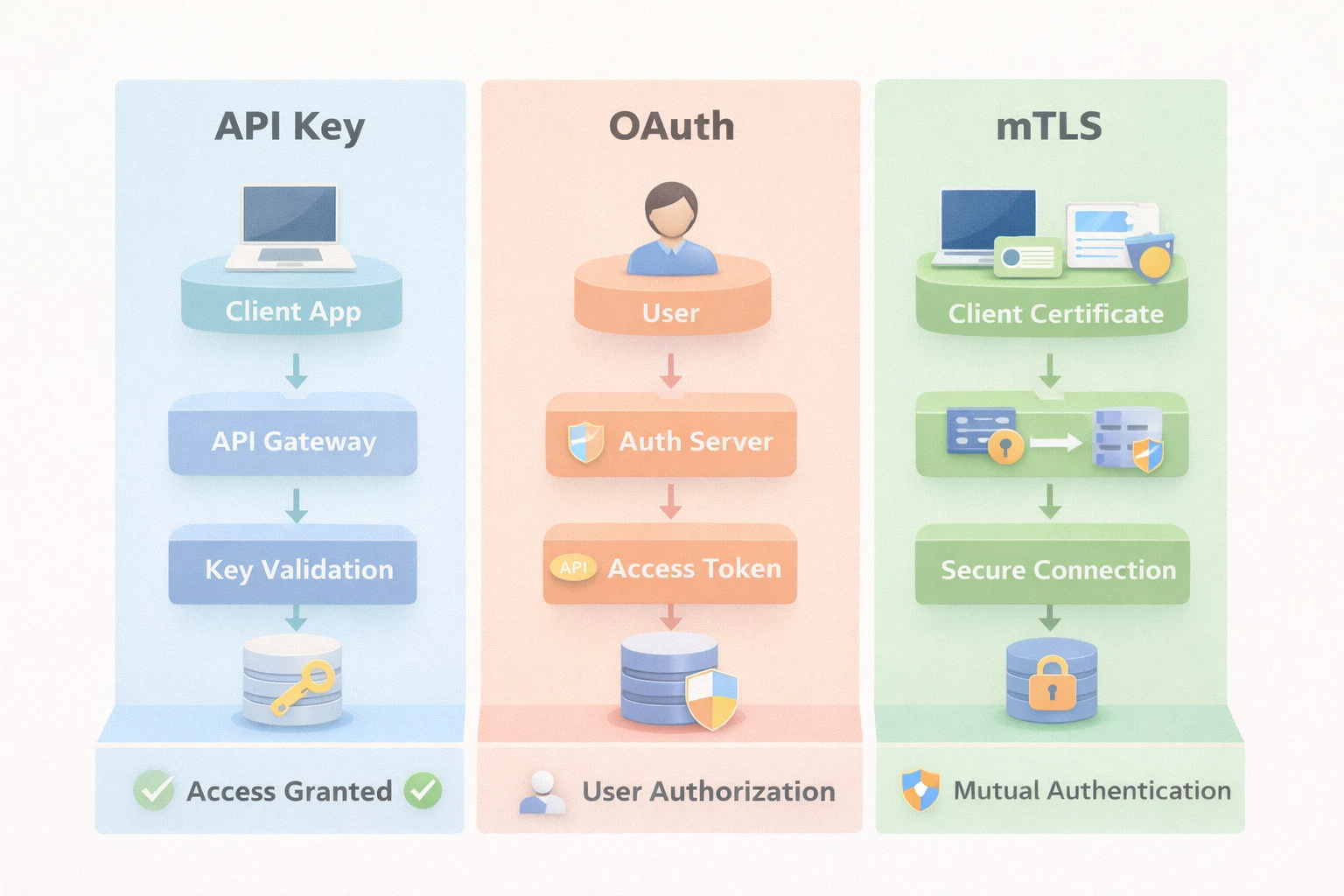
API key authentication:
- A client sends a unique key with each request, and the API checks whether the key is valid. If the key matches a registered application, the request proceeds. Because of this simplicity, API keys remain one of the most widely used methods for protecting public APIs and lightweight services.
OAuth, on the other hand, introduces a more advanced authorization model. Instead of a static key, applications receive temporary API auth tokens after a user or system grants permission. These tokens represent delegated access, allowing applications to interact with a user authentication API without exposing user credentials.
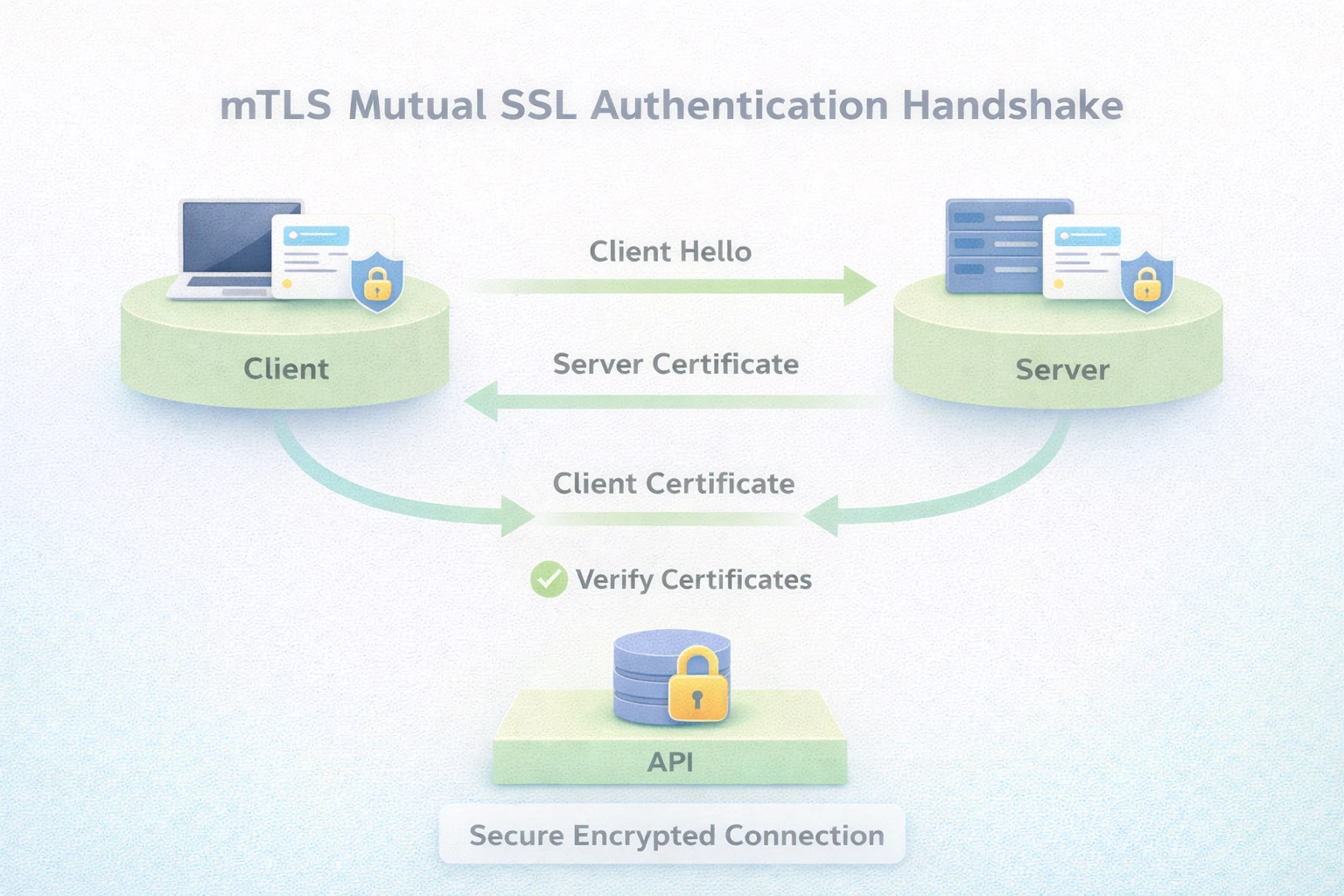
Then there is mutual SSL authentication, commonly known as mTLS (mutual Transit Layer Security). Unlike API keys or OAuth tokens, mTLS verifies identities at the network layer using digital certificates. Both the client and the server present certificates during the TLS handshake, ensuring that each side is trusted before any data exchange occurs.
Because of this certificate-based verification, mTLS security is commonly used in high-trust environments such as microservices architectures, financial systems, and zero-trust networks. It provides strong machine identity validation and encrypted communication simultaneously.
| Feature / Trait | API Key | OAuth 2.0 | mTLS |
|---|---|---|---|
| Layer of Operation | Application Layer (HTTP) | Application / Authorization Layer | Network / Transport Layer |
| Identity Verified | The Calling Application | User or Delegated System | The Physical Machine / Node |
| Credential Lifecycle | Static (Long-lived) | Short-lived (Dynamic Tokens) | Certificate-based (Rotated via CA) |
| Complexity | Extremely Low | Moderate to High | High (Requires PKI infrastructure) |
How API Key Authentication Works: Simple, Fast, and Often Misused
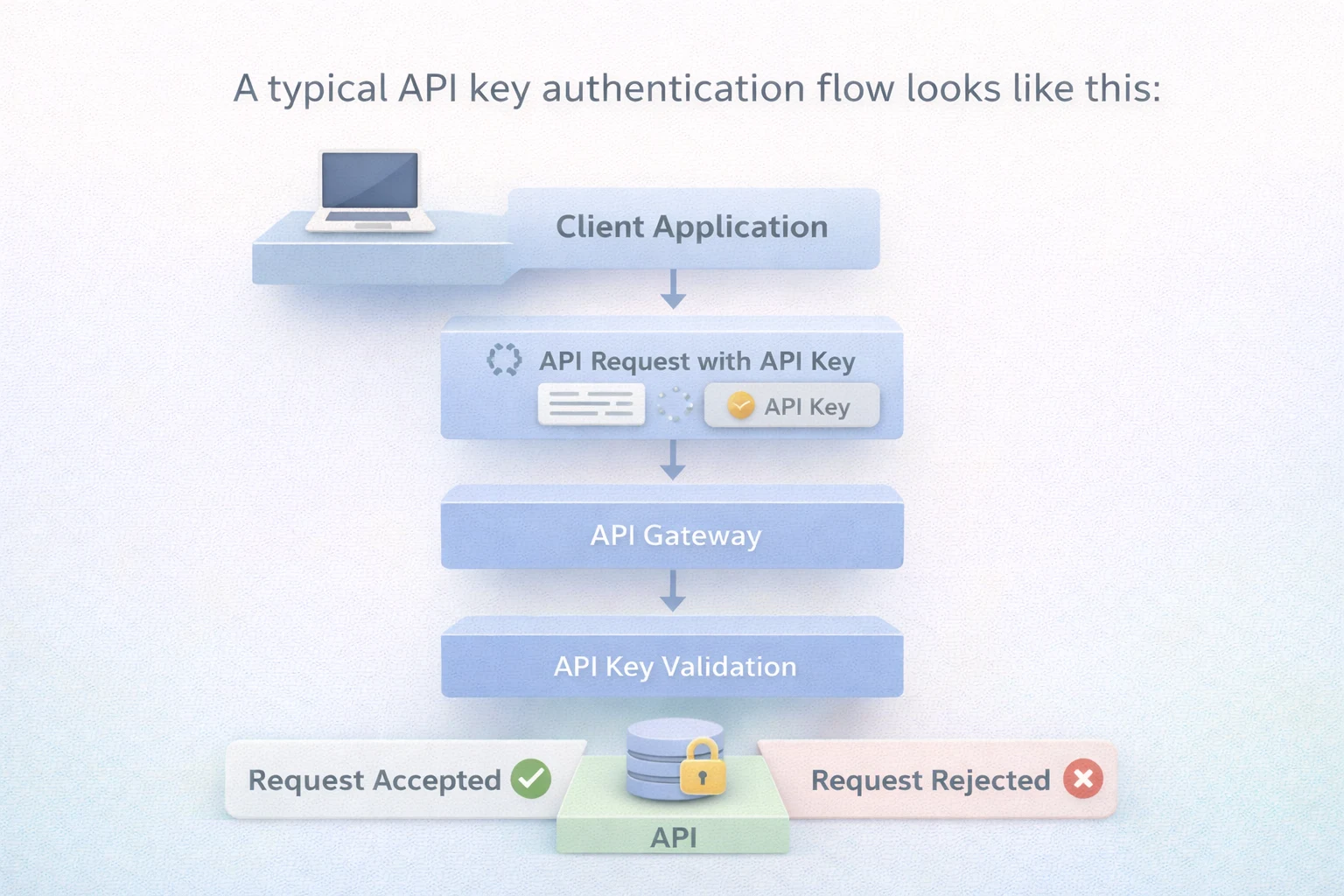
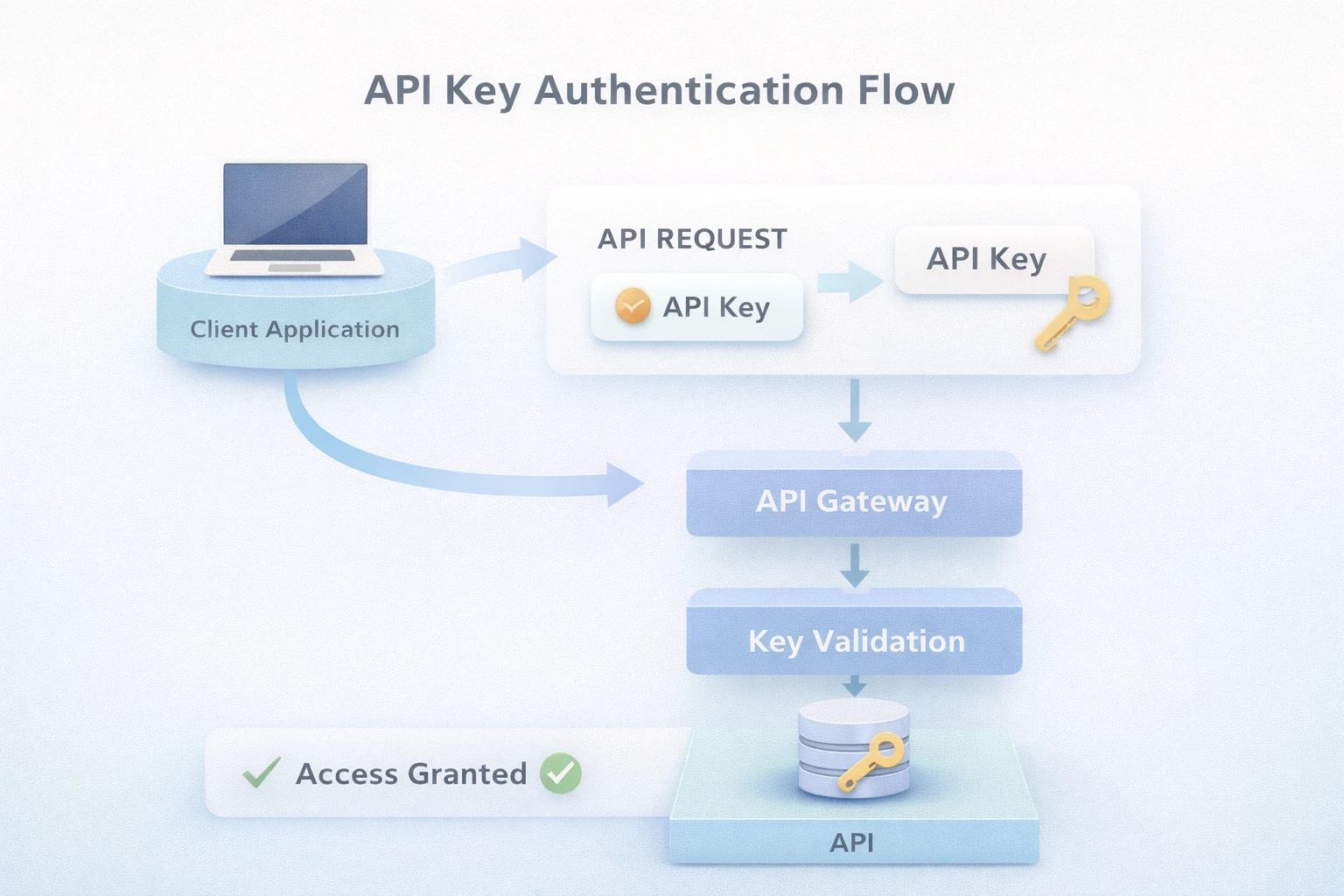
API key authentication is the oldest and simplest method used to protect APIs. The idea is straightforward: a client application includes a unique key with every request, and the API verifies that key before allowing access. If the key is valid, the request proceeds. If not, the request is rejected.
Because of this simplicity, API keys are still widely used across developer platforms, internal tools, and lightweight integrations. Many public APIs from payment platforms to weather services use API keys to identify which application is making the request.
In most implementations, the API key is sent in the HTTP request header or query parameter. The API gateway or authentication layer then performs API key validation methods to determine whether the request should be allowed. These validation methods typically include checking the key against a database, verifying rate limits, or confirming that the key belongs to a registered client.
The Blueprint: While API keys can be passed via query parameters, sending them securely inside the standard HTTP Authorization header prevents accidental exposure in web server access logs.
1curl -X GET "https://api.yourdomain.com/v1/analytics"
2-H "Authorization: Apikey LR_live_7a9f2b8c3d1e4f"
3-H "Accept: application/json"
A typical API key authentication flow looks like this:
Despite its popularity, API key authentication has important limitations.
-
Identifies the application, not the user. This means the API cannot easily determine who inside that application initiated the request. For example, if a SaaS platform integrates with an external service using an API key, every request coming from that platform appears identical to the API provider. There is no built-in way to distinguish between individual users unless additional logic is implemented.
-
Security risks arise when API keys are exposed. Since API keys are static credentials, they can be accidentally leaked through source code repositories, logs, or client-side applications. Once a key is compromised, attackers can often reuse it until the key is manually revoked or rotated.
To reduce the risks of API keys:
-
Key rotation: Regularly invalidating older keys to shrink exposure windows.
-
Usage quotas, and rate limiting: Restricting the volume of requests a key can execute to prevent automated abuse.
-
IP restrictions: Enforcing network-level restrictions so a leaked key is useless outside authorized environments.
In other words, API keys remain useful but they are rarely sufficient for complex API ecosystems on their own.
OAuth 2.0 Authentication Explained (Delegated Access Without Sharing Credentials)
OAuth 2.0 was created to solve a problem that API keys simply cannot address: secure delegated access. Instead of sharing credentials or static keys, OAuth allows applications to request permission to access resources on behalf of a user or another system. The result is a temporary API auth token that grants limited and controlled access.
In traditional authentication models, applications needed direct access to usernames and passwords to interact with user accounts. This created obvious security risks. OAuth changed this model by introducing an authorization layer that separates user credentials from application access.
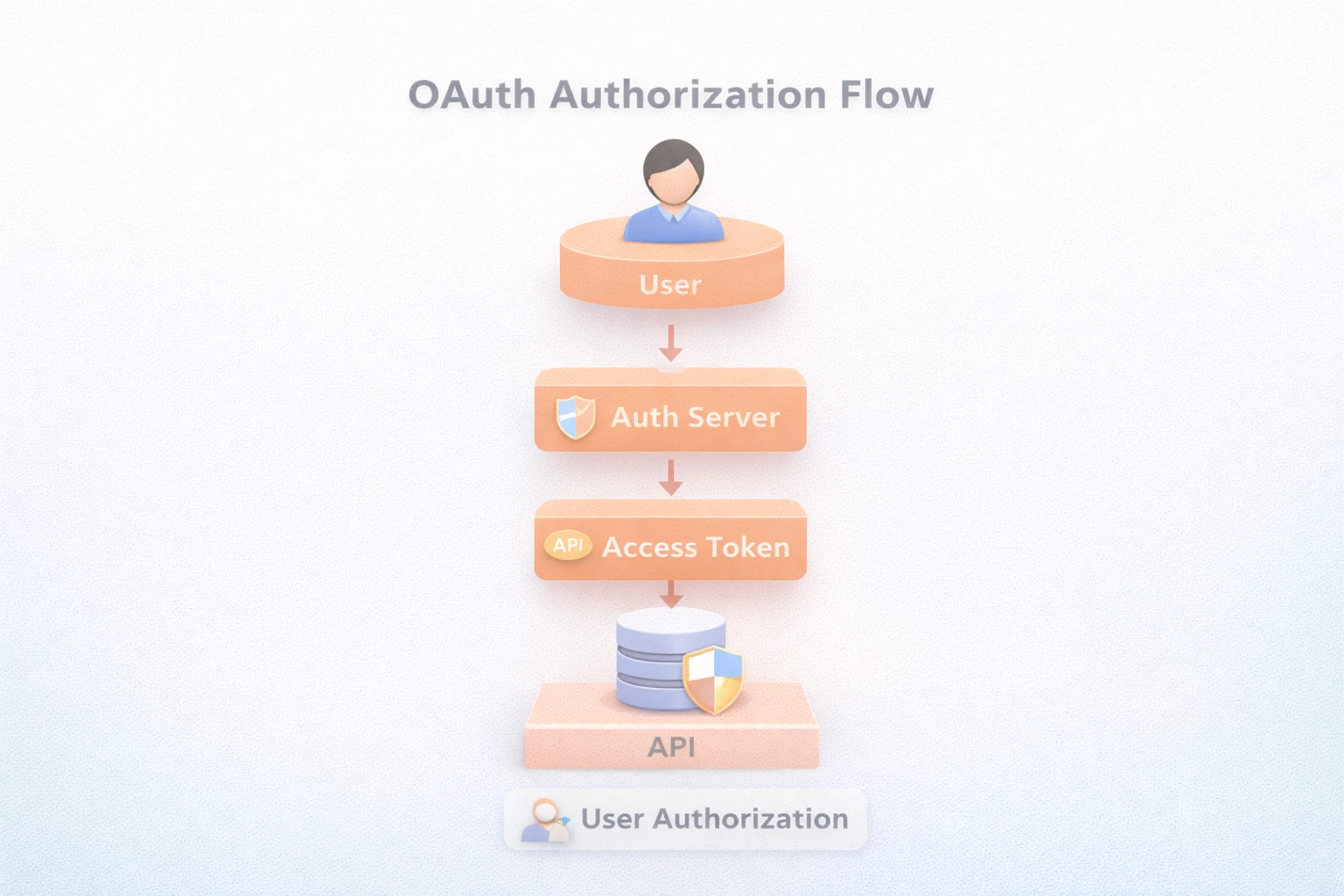
In a typical OAuth system, the user authenticates with an authorization server. Once the user approves the requested permissions, the authorization server issues an access token to the application. That token acts as the API auth token the application uses when interacting with protected APIs.
The Blueprint: An application uses a short-lived bearer token issued by your Authorization Server to authenticate its API call.
1GET /v2/user/profile HTTP/1.1
2Host: identity.yourdomain.com
3Authorization: Bearer eyJhbGciOiJIUzI1NiIsInR5cCI6IkpXVCJ9...
4Accept: application/json
Unlike API keys, OAuth tokens are short-lived and permission-scoped. This means applications only receive access to specific resources for a limited time. If the token is compromised, its damage window is significantly smaller compared to a static API key.
This token-based approach is why the debate around OAuth vs API key often appears in modern API design discussions. OAuth is especially useful for platforms that expose user authentication APIs or allow third-party integrations. Social login systems, SaaS integrations, and developer ecosystems commonly rely on OAuth to grant controlled access to user data.
Another advantage of OAuth is flexibility. The protocol supports several authorization flows, including authorization code flow, client credentials flow, and device flow. These flows allow OAuth to adapt to different environments, from web applications to mobile apps and machine-to-machine communication.
However, OAuth does introduce complexity. Implementing token issuance, validation, refresh logic, and permission scopes requires additional infrastructure such as authorization servers and identity platforms. While this complexity improves security and scalability, it also explains why smaller systems sometimes prefer API keys.
In short, OAuth excels when APIs need fine-grained authorization, delegated permissions, and user-aware access control. It moves API security beyond simple application identification and into a model where access decisions are based on identity, permissions, and token lifecycle management.
mTLS Authentication Explained (When Machines Need to Trust Each Other)
While API keys and OAuth focus on application and user authentication, mTLS authentication addresses a different challenge: verifying the identity of machines communicating with each other. In highly distributed systems especially microservices architectures services constantly exchange data across networks. Ensuring those services are legitimate is critical.
This is where mutual SSL authentication, commonly referred to as mTLS, comes into play. Unlike standard TLS, where only the server presents a certificate, mTLS requires both the client and the server to present and verify digital certificates. The connection is established only if both identities are trusted.
This dual verification mechanism significantly strengthens mTLS security because it eliminates the possibility of anonymous clients connecting to sensitive APIs. Every request must originate from a machine with a valid certificate issued by a trusted certificate authority.
The Blueprint: At the transport layer, web servers like Nginx must be explicitly configured to demand and validate a cryptographic client certificate before allowing a connection handshake to succeed.
Because of its certificate-based model, mTLS security is widely used in microservices platforms, financial systems, banking APIs, and zero-trust architectures. Service meshes such as Istio and Linkerd often rely on mTLS to ensure that every internal service call is authenticated before data exchange begins.
The comparison between mTLS vs OAuth 2.0 often appears when designing machine-to-machine authentication systems. OAuth tokens can authorize access between systems, but mTLS verifies the identity of the machines themselves at the transport layer. In many architectures, these two approaches are combined rather than competing.
Similarly, when evaluating mTLS vs API key, the security difference becomes clear. API keys can be copied or leaked because they are static credentials. Certificates used in mTLS, however, are bound to trusted infrastructure and validated through cryptographic verification, making unauthorized usage significantly harder.
Despite its security benefits, mTLS does introduce operational complexity. Managing certificate issuance, rotation, revocation, and trust chains requires careful infrastructure planning. For small systems or public APIs, this overhead may not always be justified.
Real-World API Security Scenarios: Where API Keys, OAuth, and mTLS Actually Win
The debate around OAuth vs. API Key vs. mTLS often sounds dramatic in theory. In practice, the answer is usually much simpler: each method works best in specific architectural scenarios. Confusion happens when teams try to force one authentication model into situations it was never designed for.
Scenario 1: Public & Developer Platforms (API Keys)
API keys work well in environments where authentication needs are minimal and speed matters more than complex access control.
-
Use cases: Weather APIs, analytics APIs, or payment sandbox environments rely on them to track usage and apply rate limits.
-
Why: They provide a lightweight, practical way to identify a client application without introducing the overhead of token management or heavy authorization infrastructure.
-
Limitation: An API key identifies the application, not the user. As soon as APIs begin handling user data, the system cannot determine which user authorized the request, and permissions cannot be easily scoped.
Scenario 2: User-Driven SaaS & Ecosystems (OAuth 2.0)
When users are involved, API keys quickly become inadequate. OAuth is widely used when applications need to interact with user authentication APIs or access protected resources on behalf of users.
-
Use cases: Social login systems, SaaS integrations, and third-party applications interacting with protected user resources.
-
Why: Instead of sharing credentials, users grant permission through an authorization flow. The application receives a temporary, permission-scoped API auth token. This token-based model enables strong, user-aware authorization control while keeping credentials secure.
Scenario 3: Service-to-Service Infrastructure (mTLS)
The situation changes again when dealing with internal infrastructure. In distributed systems where dozens or hundreds of internal services communicate across networks, verifying machine identities becomes critical.
-
Use cases: Financial systems, healthcare platforms, zero-trust microservices, and high-security enterprise infrastructures.
-
Why: Both the client and the server must present valid digital certificates before communication is allowed. Because certificates are cryptographically verified, it eliminates anonymous clients, prevents impersonation attacks, and helps enforce zero-trust networking principles.
Choosing the Right API Authentication Method Without Overengineering Your Security
Many teams fall into the trap of overengineering API security. They implement complex authorization frameworks for APIs that only need basic application identification, or rely on simple API keys when the system clearly requires stronger identity verification.
The right choice depends less on the technology itself and more on the type of identity your system needs to verify.
Decision Framework Matrix
Instead of treating API authentication as a one-size-fits-all solution, modern architectures select the method that matches the identity being verified:
| Use Case | Identity to Verify | Recommended Authentication | Performance & Latency Overhead |
|---|---|---|---|
| Public developer APIs | Client Application Only | API Keys | Negligible Overhead: Fast string lookup. Validating a key from an in-memory cache at the gateway takes fractions of a millisecond. |
| Applications accessing user dataSaaS & third-party access | Delegated User/System Permissions | OAuth | Moderate Overhead: Requires basic cryptographic validation of the token signature using public keys. This happens statelessly at the gateway edge. |
| Internal service-to-service communicationZero-trust microservices environments | Machine Identity at Transport Layer | mTLS | High Handshake Overhead: Requires an asymmetric cryptographic handshake where both sides swap, verify, and decrypt certificates, increasing setup latency. |
Architectural Takeaway: To avoid degrading your end-user experience, public user-facing entry points should rarely demand raw mTLS. Keep mTLS restricted to your internal service communication mesh, where connections are persistent and long-lived. This allows you to pay the cryptographic latency penalty once upon connection setup, while keeping subsequent internal API requests lightning fast.
How Modern Identity Platforms Simplify API Authentication (Without Reinventing Security)
Managing API authentication methods sounds straightforward in theory. In practice, things become complicated very quickly. Token validation, API key rotation, certificate management, authorization flows, and permission scopes can turn into a security and operational nightmare if implemented entirely from scratch.
As systems scale, APIs must handle thousands or even millions of authentication events across mobile apps, SaaS integrations, partner platforms, and internal services. Maintaining consistent authentication policies across all these environments requires centralized identity management.
This is where modern identity and access management platforms come into play. Instead of forcing developers to build authentication infrastructure themselves, identity platforms provide built-in support for protocols such as OAuth and OpenID Connect, along with tools to manage tokens, permissions, and API access policies.
For example, OAuth implementations require several moving parts. Applications must request authorization, authorization servers must issue API auth tokens, APIs must validate those tokens, and tokens must be refreshed or revoked when needed. Handling this entire lifecycle securely can be complex without a dedicated identity system.
Identity platforms simplify this by managing the token lifecycle automatically. They handle token issuance, expiration policies, scope management, and revocation processes, allowing developers to focus on building applications rather than maintaining authentication infrastructure.
Similarly, identity platforms help secure user authentication APIs by ensuring that authentication flows follow standardized security protocols. Instead of custom authentication logic scattered across services, the system relies on centralized identity verification and policy enforcement.
Another challenge that platforms address is identity fragmentation. Users often log in using different authentication methods such as email/password, social login, or passwordless authentication. Without a unified identity model, this can create multiple digital identities for the same user.
Modern CIAM platforms solve this through features like identity linking, which ensures that different login methods map to a single user profile. This unified approach improves both security and user experience by maintaining a consistent digital identity across authentication methods.
When APIs, applications, and services rely on a centralized identity layer, security policies become easier to manage and scale. OAuth tokens, API access rules, and authentication workflows can all be governed from a single platform rather than distributed across multiple systems.
In modern architectures, identity platforms therefore act as the control center for API authentication. They allow organizations to combine OAuth authorization, API access control, and secure identity management without forcing developers to reinvent the entire security stack.
This approach not only strengthens API security but also reduces operational complexity, enabling teams to implement secure authentication mechanisms faster and with fewer errors.
The Unified Reality: Chaining OAuth and mTLS
In enterprise-grade architectures, you rarely choose just one authentication method. Instead, modern systems chain them together to establish defense-in-depth security without sacrificing user context. This design pattern relies on an API Gateway acting as the secure edge of your network, coupled with an internal service mesh.
-
At the Edge: Public-facing applications, mobile apps, or third-party integrations hit your API Gateway. The gateway terminates incoming external traffic by validating an OAuth 2.0 access token. This handles user authentication and verifies granular permission scopes at the perimeter.
-
Inside the Perimeter: Once the gateway approves the request, it routes it to your internal microservices. To ensure no rogue lateral movement can occur within your data center, the network enforces mTLS between every single service node.
-
Identity Propagation: To keep track of who initiated the request while passing through encrypted internal channels, the API Gateway safely packs the original OAuth user token inside the cryptographically secure mTLS connection stream. This allows downstream backend services to maintain full user context (Identity Propagation) while operating in a zero-trust network
Conclusion
After exploring OAuth vs API key vs mTLS, the conclusion becomes fairly clear: the argument itself is often misguided. These technologies were never designed to compete directly with each other. They solve different authentication problems across different layers of modern systems
API keys remain the simplest method for identifying applications. They work well for developer platforms, public APIs, and lightweight integrations where the system only needs to recognize the calling application. However, because API keys are static credentials, they offer limited control over permissions and user-level authorization.
OAuth introduces a far more flexible model by issuing API auth tokens that represent delegated permissions. Instead of exposing credentials, users grant applications controlled access to resources. This is why OAuth dominates platforms that expose user authentication APIs and support third-party integrations.
mTLS operates at a different layer entirely. Through mutual SSL authentication, machines prove their identities using certificates before any API communication occurs. This makes mTLS security particularly valuable for microservices architectures, internal service communication, and zero-trust environments where verifying machine identity is critical.
Understanding these roles helps move the conversation beyond the usual oauth vs api key comparison. API keys authenticate applications, OAuth manages delegated authorization, and mTLS verifies machine identities at the network level. Each method protects a different part of the system.
In reality, modern architects rarely choose just one approach. A platform may use API keys for developer access, OAuth tokens for user authorization, and mTLS to secure internal service communication. When combined properly, these layers create a much stronger security model than relying on any single authentication mechanism.
The takeaway is simple: stop arguing about which method is “better.” The real goal is building an API ecosystem where the authentication method matches the identity being verified. When API keys, OAuth, and mTLS are used in the right context, they form a secure and scalable foundation for modern API-driven systems.
Organizations that implement these API authentication methods thoughtfully gain more than just security. They gain a system that can scale across applications, services, and integrations without constantly redesigning authentication flows.
And in a world where APIs power nearly every digital interaction, choosing the right authentication architecture isn’t just a security decision it’s a foundational design choice for the entire platform.
FAQs
Q: What is the main difference between OAuth and API keys?
A: The primary difference in the oauth vs api key comparison is how identity and permissions are handled. API keys simply identify the calling application, while OAuth issues temporary API auth tokens that represent delegated access permissions for users or systems.
Q: Is mTLS more secure than OAuth?
A: mTLS security focuses on verifying machine identities using certificates during connection establishment, while OAuth focuses on authorization through tokens. In environments where service-to-service trust is critical, mutual SSL authentication provides stronger machine identity verification than OAuth alone.
Q: When should API keys be used for API authentication?
A: API keys are best used when APIs only need to identify an application and enforce usage policies. They work well for developer platforms, public APIs, and simple integrations where user-level authorization is not required.
Q: What are the most common API authentication methods used today?
A: The most widely used API authentication methods include API keys, OAuth 2.0 token-based authentication, and mutual SSL authentication (mTLS). Many modern systems combine these approaches to secure different layers of the architecture.
Q: Can OAuth and mTLS be used together?
A: Yes. Many modern architectures combine OAuth and mTLS. OAuth handles authorization through API auth tokens, while mTLS authentication ensures secure machine-to-machine communication between services.
Q: What are some common API key validation methods?
A: Common API key validation methods include verifying the key against a database, applying rate limits, restricting access by IP address, enforcing usage quotas, and rotating keys regularly to reduce security risks.