Introduction
Choosing a CIAM platform used to be mostly about features. Teams compared authentication methods, developer SDKs, scalability, and pricing. If the platform could handle millions of users without slowing down login flows, it usually made the shortlist. But identity buying decisions have started to shift.
Today, security teams and compliance leaders are asking a different question before evaluating features: where is the vendor headquartered? Since CIAM platforms sit at the center of customer identity data handling logins, profiles, authentication events, and user attributes the vendor’s legal jurisdiction can matter as much as the technology itself.
Much of this discussion stems from regulations like the U.S. CLOUD Act, which allows U.S. authorities to request access to data controlled by American companies, even if the data is stored outside the United States. This doesn’t mean data is automatically exposed, but it does introduce legal considerations that organizations operating in privacy-sensitive regions must evaluate carefully.
As a result, many companies, especially those operating in Europe, Canada, and APAC are exploring CIAM platforms headquartered outside the United States. The goal is not to avoid U.S. technology entirely, but to reduce jurisdictional complexity and better align with regional privacy frameworks such as GDPR and PIPEDA.
This shift has created growing interest in non-American CIAM vendors that offer strong authentication capabilities, modern developer tooling, and enterprise scalability while operating under different legal jurisdictions.
The good news is that the global identity ecosystem now offers several credible alternatives. Vendors across Canada, Europe, Switzerland, and other regions provide mature CIAM platforms capable of supporting large customer bases, partner ecosystems, and modern SaaS applications.
In this guide, we explore the top non-American CIAM vendors in 2026, highlighting platforms that combine strong identity architecture with jurisdictional independence.
What “Non-American CIAM Vendor” Actually Means
When people search for non-American CIAM vendors, they usually assume it simply means identity platforms headquartered outside the United States. While that’s technically correct, the reality is a bit more nuanced.
A vendor’s headquarters does determine which primary legal jurisdiction governs the company. For example, CIAM providers headquartered in Canada, Germany, Switzerland, or France operate under their respective national privacy and data protection laws. For organizations concerned about jurisdictional exposure, this factor often becomes the starting point of vendor evaluation.
However, headquarters alone doesn’t automatically guarantee full data sovereignty.
Modern CIAM platforms operate as global cloud services. This means several additional factors influence how customer identity data is handled, including where the data is hosted, which cloud infrastructure providers are used, how administrative access is controlled, and whether subprocessors operate across different regions.
In other words, choosing a non-American CIAM vendor reduces certain jurisdictional risks, but responsible buyers still need to evaluate the full identity architecture behind the platform.
For this guide, we define a non-American CIAM vendor using three practical criteria.
-
First, the vendor must be headquartered outside the United States.
-
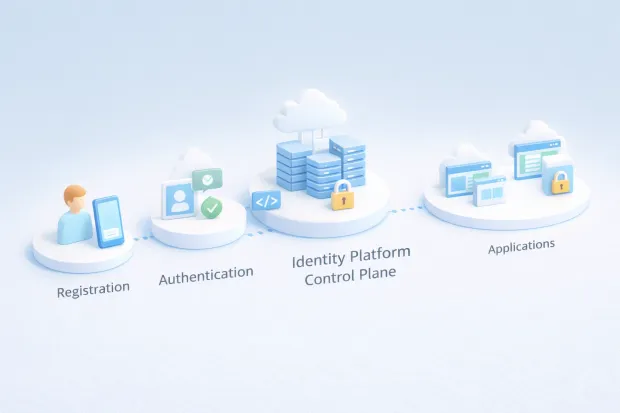
Second, the platform must offer customer identity and access management capabilities, such as registration, authentication, user management, identity federation, and secure access for external users.
-
Third, the platform must be capable of supporting modern digital applications, including large-scale customer platforms, partner ecosystems, or multi-tenant SaaS environments.
Using these criteria helps ensure the vendors listed here are not only outside U.S. jurisdiction but also relevant for real-world CIAM deployments.
With that definition in place, let’s look at the vendors that stand out in today’s global identity landscape.
Our Selection Criteria for the Vendors in This List
Not every identity platform qualifies for a non-American CIAM vendor list. These were our disqualification criteria:
-
If you are a workforce IAM only.
-
If you specialize in authentication or fraud detection rather than full customer identity management.
Here are our selection criteria:
-
HQ outside of the United States. Relevant for organizations evaluating data sovereignty and regional compliance considerations.
-
Offer a true CIAM platform, not just a narrow authentication product. That means capabilities such as user registration, authentication flows, identity federation, profile management, access control, and APIs for integrating identity into customer-facing applications.
-
Support modern digital identity use cases. This includes large-scale B2C applications, partner ecosystems, digital services, and multi-tenant SaaS platforms where managing external users securely becomes critical.
-
Industry relevance and market adoption. Vendors included in this guide have established platforms used by enterprises, digital businesses, or regulated industries that require scalable identity infrastructure.
Using these criteria ensures the vendors listed here are not just geographically different from U.S. providers, but also credible CIAM platforms capable of supporting real-world identity architectures.
Now let’s explore the top non-American CIAM vendors organizations are evaluating in 2026.
Top Non-American CIAM Vendors
The global CIAM market is no longer dominated by vendors from a single region. Several identity platforms headquartered outside the United States now offer mature CIAM capabilities, strong security controls, and scalable architectures for modern digital applications.
These vendors support everything from large B2C identity ecosystems to B2B SaaS platforms and regulated digital services. While their strengths vary from privacy-first architectures to developer-focused identity tooling, they all share one common trait: they operate under non-U.S. legal jurisdictions, which can be relevant for organizations evaluating sovereignty and regional compliance considerations.
LoginRadius (Canada)
LoginRadius is a Canada-headquartered CIAM platform designed to support large-scale customer identity systems. The platform provides capabilities such as user registration, passwordless authentication, social login, MFA, identity federation, and customer profile management.
Its architecture is built to support high-volume consumer applications, making it suitable for retail, SaaS platforms, digital media, and global online services that manage millions of customer identities. The platform also offers developer-friendly APIs and SDKs, allowing teams to integrate authentication and identity features directly into web and mobile applications.
For organizations evaluating CIAM vendors in Canada, LoginRadius is often considered a strong option due to its scalability and focus on customer identity use cases.
SAP Customer Identity and Access Management (Germany)
SAP Customer Identity and Access Management, originally developed from the Gigya platform, is a large-scale CIAM solution used by global enterprises. The platform focuses heavily on customer data management, consent management, and privacy compliance.
Because SAP is headquartered in Germany, many organizations view it as a European alternative to U.S.-based identity providers, particularly for enterprises already using the broader SAP ecosystem.
The platform is commonly used by companies managing large digital customer bases, where integrating identity with customer data platforms, marketing systems, and consent management workflows becomes important.
Thales OneWelcome (France / Netherlands)
Thales OneWelcome combines identity capabilities from the OneWelcome platform with the broader Thales digital security portfolio. The platform supports CIAM, workforce identity, and B2B identity scenarios within a unified identity architecture.
It is particularly strong in regulated industries such as finance, government, and telecommunications, where strict authentication requirements and identity assurance levels are necessary.
With headquarters in France and strong European roots, Thales OneWelcome is often considered by organizations looking for a European identity platform aligned with GDPR-driven environments.
CIDAAS (Germany)
CIDAAS positions itself as a cloud-native identity platform developed and hosted in Germany, emphasizing compliance with European data protection standards.
The platform supports typical CIAM capabilities such as authentication, user lifecycle management, identity federation, and passwordless authentication. It also focuses on privacy-driven identity architecture and identity verification integrations.
Organizations evaluating German-based CIAM vendors often consider cidaas when data protection alignment with EU privacy regulations is a key requirement.
Ubisecure (Finland)
Ubisecure is a Finland-based identity platform known for supporting complex identity ecosystems that involve customers, partners, and delegated authorities.
The platform supports CIAM scenarios but is particularly strong in B2B and public-sector identity use cases, where organizations must manage identity relationships across multiple entities and trust frameworks.
Its architecture supports identity federation, digital identity verification, and access control models used in government services, financial services, and regulated industries across Europe.
Nevis (Switzerland)
Nevis is a Swiss identity and authentication platform with strong roots in financial services and high-security environments.
The platform focuses heavily on secure authentication, adaptive authentication, and identity orchestration, making it a popular option for organizations that prioritize security and strong authentication controls.
With Switzerland’s reputation for strong privacy and security standards, Nevis is often considered by companies seeking identity platforms with high-trust security positioning.
ReachFive (France)
ReachFive is a France-based CIAM platform designed to support modern digital businesses that rely heavily on customer engagement and identity-driven personalization.
The platform provides features such as social login, progressive profiling, consent management, and customer identity orchestration. It is particularly popular among digital commerce, retail, and media companies that need to balance user experience with identity security.
ReachFive’s positioning focuses on privacy-aware customer identity management within European regulatory environments, making it a relevant option for organizations operating under GDPR.
These vendors represent a diverse set of non-American CIAM platforms, each bringing different strengths depending on the organization’s identity architecture, regulatory environment, and application scale.
What to Check Before Calling Any Vendor “Sovereign”
Choosing a CIAM vendor headquartered outside the United States may reduce certain jurisdictional concerns, but it doesn’t automatically guarantee full data sovereignty. Identity platforms operate within complex cloud ecosystems, and several architectural and operational factors influence how customer identity data is actually handled.
This is why organizations evaluating non-American CIAM vendors need to look beyond headquarters location and examine the broader data governance and infrastructure model behind the platform.
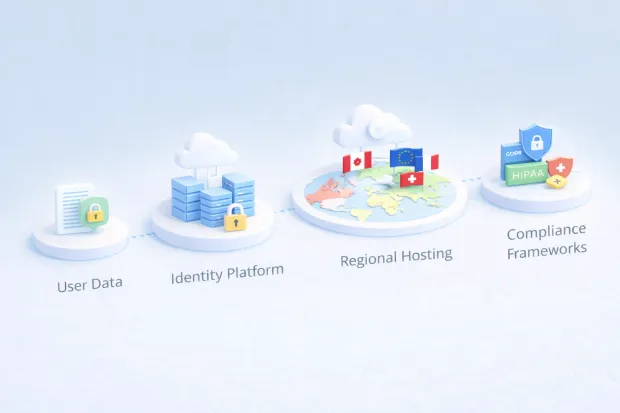
One important factor is data hosting location. Many identity platforms allow customers to select specific hosting regions such as Canada, the EU, or APAC. Ensuring that identity data is stored within a preferred jurisdiction helps organizations align with regional privacy laws and data residency requirements.
Another consideration is the platform’s cloud infrastructure providers and subprocessors. Even if the CIAM vendor itself is headquartered outside the U.S., supporting services such as cloud hosting, analytics tools, or communication providers may still operate under different jurisdictions. Understanding this vendor ecosystem helps avoid unexpected compliance gaps.
Organizations should also evaluate administrative access controls. Some CIAM platforms allow remote support teams or administrators to access production environments for troubleshooting. Strong identity platforms implement strict controls around privileged access, audit logging, and role-based permissions to ensure sensitive identity data is not exposed unnecessarily.
Encryption and key management also play a major role in data protection. Vendors that support strong encryption standards, secure token handling, and controlled key management practices provide additional safeguards for protecting customer identity information.
Finally, organizations should review the vendor’s data transfer and compliance policies. Clear documentation around international data transfers, privacy compliance frameworks, and regional regulatory alignment helps ensure that the identity platform can support long-term compliance needs.
In short, selecting a non-American CIAM vendor can be a step toward improving jurisdictional alignment, but true data governance depends on the platform's full identity architecture.
Direct Comparison: Top Non-American CIAM Vendors at a Glance
Now that we’ve covered the vendors and the sovereignty angle, the obvious question is: which platform is actually the right fit?
Because let’s be honest, “non-American” is a filter, not a buying strategy.
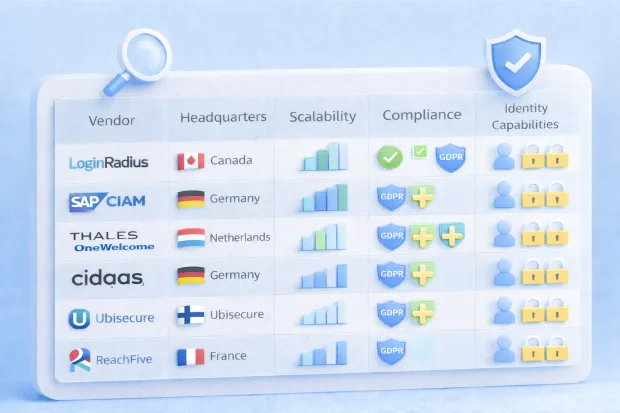
A vendor may be headquartered in Canada, Germany, or Switzerland, but that alone does not make it the best choice for your architecture. Some platforms are better for high-scale B2C CIAM. Others are more suitable for regulated industries, delegated identity models, or B2B SaaS environments. The smarter approach is to compare these vendors based on what they are actually built to do.
| Vendor | HQ | Best Fit | Key Strength | Watch-Out |
|---|---|---|---|---|
| LoginRadius | Canada | B2C CIAM, digital platforms, large customer bases | Broad CIAM coverage, scalability, developer-friendly APIs | Best evaluated when customer identity is the main priority |
| SAP CIAM | Germany | Large enterprises, SAP-heavy ecosystems | Enterprise scale, consent and customer data alignment | Can be heavier for teams wanting faster implementation |
| Thales OneWelcome | France / Europe | Regulated industries, complex enterprise identity | Strong security and compliance positioning | May be more enterprise-heavy than mid-market teams need |
| cidaas | Germany | GDPR-focused and sovereignty-sensitive deployments | German hosting and privacy-first positioning | May have less global mindshare than larger vendors |
| Ubisecure | Finland | Public sector, B2B identity, delegated authority | Strong for trust frameworks and complex identity relationships | More specialized than general-purpose CIAM vendors |
| Nevis | Switzerland | Security-first organizations, high-assurance authentication | Strong authentication and trusted security profile | Often evaluated more for authentication depth than broad CIAM breadth |
| ReachFive | France | Retail, commerce, digital customer engagement | Customer-focused CIAM with privacy-aware positioning | Better fit for customer engagement use cases than every enterprise scenario |
This comparison makes one thing clear: these vendors are not interchangeable.
If your company runs a large consumer application, you will likely prioritize scalability, registration flows, profile management, and flexible authentication journeys. If you operate in a regulated or government-linked environment, compliance depth and administrative control may matter more.
If you are building a B2B SaaS product, multi-tenancy and tenant-scoped identity will probably carry more weight than traditional CIAM features.
That is why the next step is not just to compare vendors, but to match them to the type of identity problem you are actually trying to solve.
Which Non-American CIAM Vendor Is the Right Fit For You?
After reviewing the vendor landscape, one thing becomes clear: there is no single “best” non-American CIAM platform for every organization. The right choice depends heavily on your identity architecture, application type, and scale requirements.
Different vendors have built their platforms around different identity problems. Some specialize in large-scale consumer identity systems, while others focus on regulated industries, B2B identity relationships, or modern SaaS platforms.
Understanding these strengths makes it easier to narrow down the right option.
For Large B2C Customer Platforms
Organizations running high-traffic digital platforms such as retail, media, gaming, and global consumer apps typically require a CIAM solution capable of managing millions of identities, high login volumes, and flexible authentication journeys.
Platforms like LoginRadius and SAP Customer Identity and Access Management are often evaluated in these environments because they support large-scale user management, identity federation, and secure authentication across web and mobile applications.
These platforms are designed to handle large identity databases and high authentication throughput, which is critical for consumer-facing systems.
For Regulated and Privacy-Sensitive Environments
Companies operating in sectors such as finance, government, healthcare, or telecommunications often prioritize compliance, identity assurance, and strong authentication controls.
Vendors like Thales OneWelcome, CIDAAS, and Nevis tend to stand out in these environments due to their strong focus on security, regulatory alignment, and identity assurance frameworks.
Organizations dealing with strict privacy regulations or digital identity frameworks often evaluate these platforms for their compliance-friendly identity architectures.
For B2B SaaS and Multi-Tenant Platforms
Identity requirements change significantly when building B2B SaaS applications. Instead of managing individual consumers, SaaS platforms must handle tenants, organizations, roles, permissions, and enterprise SSO integrations.
Platforms like LoginRadius are designed specifically for these scenarios, providing built-in capabilities for tenant management, organization-based access control, and enterprise customer onboarding.
This approach allows SaaS companies to implement identity infrastructure that aligns with multi-tenant architecture patterns.
For Customer Engagement and Digital Commerce
Companies focused on digital customer engagement, personalization, and marketing-driven identity often require CIAM platforms that combine authentication with customer profile insights and consent management.
Platforms such as ReachFive and LoginRadius are frequently evaluated in these environments because they support progressive profiling, social login, and consent-driven identity management capabilities commonly used in retail and digital commerce ecosystems.
For Authentication Modernization and Passwordless Security
Some organizations are not replacing their CIAM platform entirely but instead looking to modernize authentication experiences.
Vendors like Authsignal provide specialized capabilities such as passkeys, adaptive MFA, and risk-based authentication, which can strengthen login security while reducing friction for users.
These platforms are often integrated alongside an existing identity system to enhance authentication security layers.
Ultimately, selecting the right CIAM platform requires aligning vendor strengths with your identity use case, application architecture, and compliance requirements.
Conclusion
Customer identity platforms used to be evaluated mostly on technical capabilities. Teams compared authentication methods, scalability, APIs, and user experience. If the platform handled registrations smoothly and didn’t break during peak traffic, it usually passed the test. That approach is changing.
As digital platforms collect more identity data and privacy regulations continue to evolve, organizations are paying closer attention to where their identity providers operate legally. The jurisdiction behind a CIAM vendor can influence how data is governed, how compliance requirements are met, and how cross-border access to identity data is managed.
This is why the conversation around non-American CIAM vendors has gained momentum. Companies are not necessarily abandoning U.S.-based identity providers, but they are becoming more deliberate about how jurisdiction, hosting location, and data governance impact their identity infrastructure.
Fortunately, the global CIAM ecosystem now offers several credible alternatives. Vendors headquartered in Canada, Germany, France, Switzerland, Finland, and other regions provide mature identity platforms capable of supporting large-scale customer systems, partner ecosystems, and modern SaaS applications.
The key takeaway is simple: choosing a CIAM platform is no longer just about authentication features.
It’s about aligning identity architecture with security strategy, regulatory requirements, and long-term data governance goals.
For organizations evaluating CIAM vendors in 2026, the smartest approach is to assess not only what a platform can do technically, but also which legal and operational framework it ultimately operates within.
Because when identity sits at the center of your digital ecosystem, jurisdiction matters just as much as technology.
FAQs
Q: What are the top non-American CIAM vendors in 2026?
A: Some of the most recognized CIAM vendors headquartered outside the United States include LoginRadius (Canada), SAP Customer Identity and Access Management (Germany), Thales OneWelcome (France), CIDAAS (Germany), Ubisecure (Finland), Nevis (Switzerland), and ReachFive (France). These platforms provide customer identity management capabilities for modern digital applications.
Q: Why are companies looking for non-American CIAM vendors?
A: Many organizations evaluate non-American CIAM vendors to better align with regional privacy regulations, data residency requirements, and jurisdictional considerations. Legal frameworks like the U.S. CLOUD Act have encouraged some companies to assess identity providers headquartered in other regions.
Q: Does choosing a non-American CIAM vendor guarantee data sovereignty?
A: Not necessarily. Headquarters location is only one factor. Organizations should also review data hosting regions, subprocessors, administrative access policies, encryption practices, and data transfer frameworks to understand how identity data is actually managed.
Q: Which CIAM vendors are best for B2B SaaS platforms?
A: For B2B SaaS environments that require multi-tenant identity management, organization-level access control, and enterprise SSO, platforms like Frontegg are often evaluated alongside traditional CIAM vendors.
Q: Are European CIAM vendors better for GDPR compliance?
A: European CIAM vendors may align closely with GDPR-focused privacy frameworks, but compliance ultimately depends on how a platform is implemented. Organizations still need to configure consent management, data retention policies, and identity governance correctly.
Q: What features should businesses look for in a CIAM platform?
A: Key capabilities typically include user registration, authentication methods, passwordless login, identity federation, user lifecycle management, API integrations, security controls, and scalability for large identity databases. These features help ensure the CIAM platform can support modern digital applications securely.