Introduction
For years, businesses treated customer identity infrastructure like a utility. Pick a CIAM vendor, deploy login and authentication, and move on. But in Europe, identity data is no longer just another dataset sitting in the cloud. It’s a regulated asset tied directly to privacy laws, digital sovereignty, and national security policies.
The turning point came after the Schrems II ruling, which invalidated the EU-US Privacy Shield and exposed how easily European user data could fall under foreign jurisdiction. Since then, regulators, enterprises, and even startups have started asking a very uncomfortable question: Where exactly does our identity data live, and who can legally access it?
This is where European CIAM vendors with EU-based data centers enter the conversation. Instead of relying on identity platforms governed by foreign legislation, many organizations now prefer providers headquartered and operated within Europe.
The goal isn’t just compliance with GDPR. It’s ensuring that authentication systems, identity profiles, and session data remain under European legal jurisdiction. The shift is also fueled by the next wave of European digital identity regulation. Frameworks like eIDAS 2.0, the EU Digital Identity Wallet, and NIS2 cybersecurity requirements are redefining how identity infrastructure must operate across the region.
CIAM platforms now need to support interoperability with national identity schemes, strong authentication standards, and privacy-first architecture by design.
And let’s be honest, this is no longer a niche concern limited to banks or government systems. Any company handling European customer accounts, whether it’s a SaaS platform, fintech product, retail brand, or online marketplace, now has to think about data residency, regulatory alignment, and jurisdictional control before choosing an identity provider.
So if your CIAM vendor still treats “EU region hosting” as a checkbox feature while the headquarters and legal authority sit somewhere else, regulators may politely raise an eyebrow. In 2026, where your identity platform lives matters just as much as how it authenticates users.
In this guide, we’ll explore the top European CIAM vendors with EU data centers, the compliance frameworks shaping identity infrastructure across the region, and what businesses should look for when selecting a CIAM platform built for the realities of modern European digital identity.
Why European Data Centers Matter for CIAM Platforms
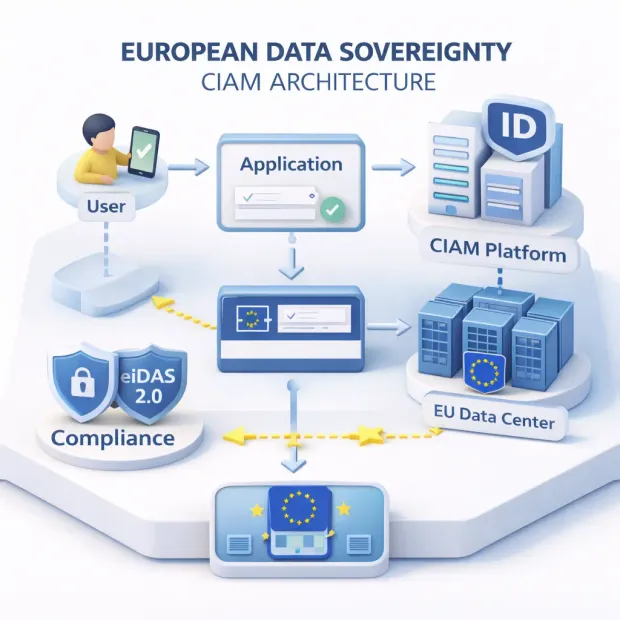
When people hear “EU data center,” they often assume it’s simply about server location. In reality, it’s about jurisdiction. Where your CIAM infrastructure operates determines which laws govern your customer identity data and which authorities can legally access it.
Why should your CIAM Data Centers live in Europe? It boils down to three pillars:
-
Legal Sovereignty: Keeping data under EU jurisdiction simplifies GDPR compliance and avoids the complexities of international data transfers.
-
Future-Proofing: Proximity to European infrastructure allows for seamless integration with upcoming mandates like eIDAS 2.0 and digital identity wallets.
-
Optimized Performance: Localized servers reduce latency in authentication flows, ensuring a snappy, reliable login experience for European users.
What to Look for in a European CIAM Vendor
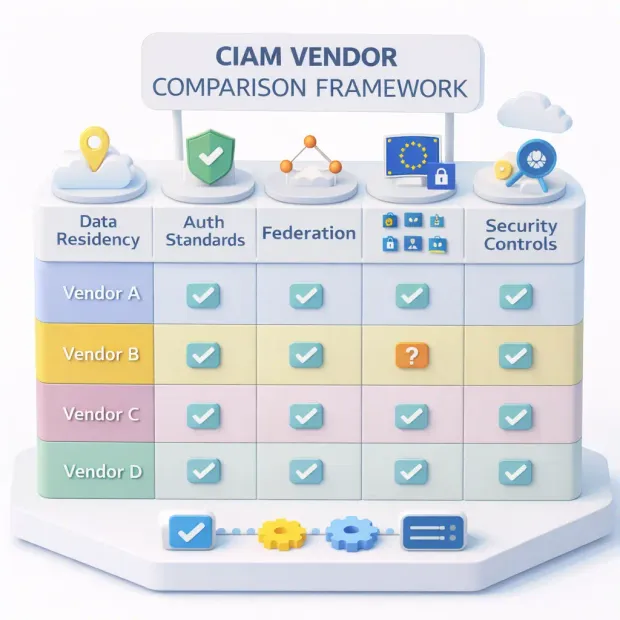
Not every identity platform that claims “EU hosting” is truly built for European identity requirements. Some vendors simply spin up a regional cloud instance and call it a day. But when customer identity data, authentication flows, and regulatory compliance are involved, businesses need to look deeper than a marketing checkbox.
-
You must verify true European data residency. This means identity data—user profiles, authentication logs, tokens, and session information—is stored and processed within EU jurisdictions.
-
Evaluate the platform’s authentication architecture. Modern CIAM solutions should support open standards like OAuth 2.0, OpenID Connect, and SAML, along with passwordless authentication methods such as passkeys and WebAuthn.
-
Check how the platform handles identity federation and interoperability. With initiatives like eIDAS 2.0 and the EU Digital Identity Wallet, CIAM platforms must integrate with national identity providers, trusted identity frameworks, and cross-border authentication systems.
Security capabilities also matter. A robust CIAM platform should include adaptive authentication, risk-based access controls, device intelligence, and anomaly detection. These features help organizations protect customer accounts from threats like credential stuffing, phishing, and automated login attacks without disrupting legitimate users.
In other words, choosing a European CIAM vendor isn’t just about geography. It’s about selecting a platform that understands how European identity regulations, digital ecosystems, and security expectations shape the way modern authentication systems must operate.
Top European CIAM Vendors with EU Data Centers (2026)
Europe’s identity landscape is evolving quickly. As regulations tighten and digital identity frameworks mature, organizations are increasingly looking for CIAM vendors that operate within European jurisdiction while supporting modern authentication standards.
The vendors listed below are headquartered in Europe and provide CIAM capabilities with EU-based infrastructure. Each platform approaches customer identity differently, some focus on regulated industries, others on digital identity ecosystems but all operate within the broader European compliance environment shaped by GDPR, eIDAS 2.0, and NIS2.
CIDAAS (Germany)
CIDAAS is one of the few CIAM platforms that openly markets itself as a “digitally sovereign identity cloud” built in Europe. Headquartered in Germany, the company focuses heavily on privacy-first identity architecture and EU data residency.
The platform supports modern authentication standards including OpenID Connect, OAuth 2.0, and passwordless login using WebAuthn. It also provides adaptive authentication, identity lifecycle management, and identity federation capabilities designed for large-scale consumer platforms.
Thales OneWelcome (France / Netherlands)
Thales OneWelcome represents one of the largest identity players in Europe following Thales’ acquisition of the Dutch CIAM provider OneWelcome. The platform combines Thales’ security expertise with OneWelcome’s identity orchestration technology.
The solution is widely used across financial services, government services, and highly regulated industries where strong authentication and identity assurance are critical. It supports advanced capabilities such as identity proofing, digital identity verification, and multi-factor authentication aligned with European security standards.
Ubisecure (Finland)
Based in Finland, Ubisecure focuses on building federated identity platforms for complex digital identity ecosystems. The company has strong adoption across Nordic markets and is particularly known for integrating with national identity frameworks and federation networks across the region.
Ubisecure’s identity platform supports authentication standards like OpenID Connect and SAML, along with federation capabilities that allow organizations to connect external identity providers, government identity schemes, and enterprise systems.
Signicat (Norway)
Signicat is a well-known identity provider across Europe, particularly in the banking, fintech, and public sector. Headquartered in Norway, the company focuses on identity verification, authentication, and digital signing services.
The platform integrates with a wide range of European national identity systems, including BankID and other government-backed identity schemes. This makes Signicat particularly valuable for organizations that need verified identity flows rather than basic authentication alone.
Engity (Germany)
Engity positions itself as a privacy-focused IAM and CIAM platform built specifically for European regulatory environments. The company emphasizes GDPR-first identity architecture and European jurisdiction over customer identity data.
The platform includes capabilities such as authentication, identity federation, and access management while maintaining strict data residency policies. For organizations concerned about extraterritorial data access risks, Engity promotes its identity infrastructure as an EU-governed alternative to global identity platforms.
Evidian (France)
Evidian, part of the Atos/Eviden ecosystem, has long been recognized for enterprise identity management and identity governance solutions. While historically associated with workforce identity, the platform also supports customer identity and access management capabilities for large-scale environments.
Evidian is often deployed in government, critical infrastructure, and large enterprise systems, where strong identity governance and compliance controls are essential.
The Global Bridge: LoginRadius and Sovereign Infrastructure
While many organizations prioritize European identity vendors for regulatory alignment, global businesses often require CIAM platforms that can operate across multiple regions without compromising data residency requirements. This is where platforms designed with regional infrastructure flexibility become valuable.
LoginRadius provides a global CIAM platform that supports regional data hosting, including European data centers, allowing organizations to deploy identity infrastructure within EU jurisdictions while maintaining a scalable identity architecture for global applications.
The platform supports modern identity standards such as OAuth 2.0, OpenID Connect, SAML, and passwordless authentication, as well as capabilities including adaptive authentication, identity federation, and secure customer profile management.
These features allow businesses to manage millions of customer identities while maintaining security controls aligned with global compliance frameworks.
For companies operating across North America, Europe, and other international markets, this type of architecture creates a practical balance. Identity infrastructure can remain compliant with European data residency expectations, while the overall identity platform continues to support global user bases, multi-region deployments, and high-volume authentication traffic.
In other words, organizations don’t necessarily have to choose between regional compliance and global scalability. With the right CIAM architecture, it’s possible to maintain European data sovereignty while still operating a modern identity platform that serves customers anywhere in the world.
How eIDAS 2.0 Will Reshape European Identity Systems
Europe is moving toward something far bigger than traditional login systems. With eIDAS 2.0, the European Union is building a standardized digital identity framework that could fundamentally change how authentication works across the region.
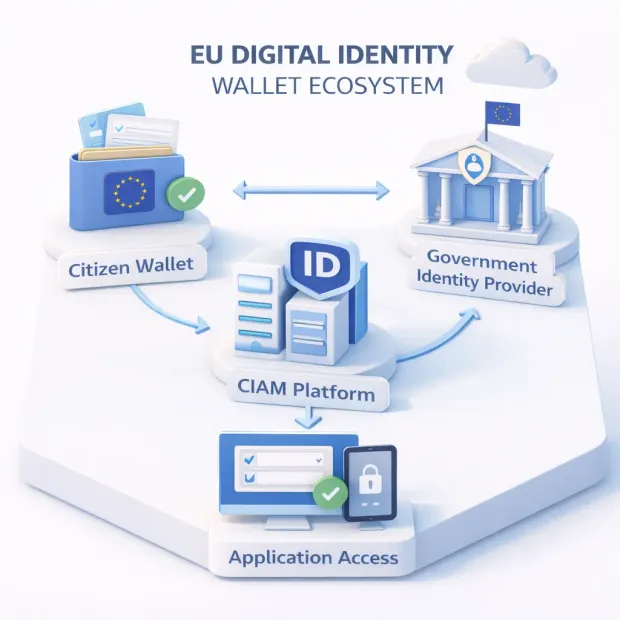
At the center of this initiative is the EU Digital Identity Wallet. Instead of relying only on passwords, social logins, or individual identity providers, citizens will be able to authenticate using government-issued digital identity credentials stored in secure wallets.
These credentials can verify attributes such as identity, age, education, or professional qualifications across both public and private services.
For CIAM platforms, this introduces a new layer of interoperability. Identity systems will need to support authentication flows that interact with government-backed identity providers, digital wallets, and verified credentials. In practical terms, this means CIAM platforms must evolve beyond simple login systems to become identity orchestration layers capable of handling multiple trust frameworks.
Another important aspect of eIDAS 2.0 is cross-border identity recognition. A digital identity issued in one EU member state must be accepted by services in another. That requires CIAM infrastructure to support standardized authentication protocols, strong identity assurance levels, and consistent verification mechanisms across different countries.
For businesses, the implication is clear: identity systems deployed in Europe must be ready to integrate with national digital identity schemes and future EU identity wallets. Platforms that already operate within the European identity ecosystem are often better prepared to support these integrations as the regulatory framework evolves.
In short, eIDAS 2.0 signals a shift from isolated login systems toward a pan-European digital identity network. CIAM platforms will increasingly function as the bridge between customer applications, national identity providers, and trusted credential ecosystems across the EU.
Conclusion
Customer identity infrastructure in Europe is entering a new phase. What once revolved around login pages and authentication APIs is now deeply connected to data sovereignty, regulatory compliance, and cross-border digital identity frameworks.
European regulations such as GDPR, NIS2, and eIDAS 2.0 are pushing organizations to rethink how identity data is stored, processed, and verified. Instead of treating identity management as a backend utility, businesses are now evaluating CIAM platforms based on jurisdiction, infrastructure location, and interoperability with emerging identity ecosystems.
This shift explains the growing demand for European CIAM vendors with EU-based data centers. Platforms headquartered and operated within Europe often provide clearer guarantees around data residency and regulatory alignment, which reduces legal uncertainty for organizations managing large volumes of customer identity data.
At the same time, the identity landscape is expanding beyond traditional authentication. Digital identity wallets, verified credentials, and cross-border identity verification will increasingly shape how users sign in, prove attributes, and access services across the European Union.
For businesses operating in European markets, choosing the right CIAM vendor is no longer just a technical decision; it’s a strategic infrastructure choice. The platforms that succeed in this environment will be the ones that combine strong authentication technology, regional compliance awareness, and the flexibility to integrate with the next generation of European digital identity systems.
FAQs
Q: What is a European CIAM vendor?
A: A European CIAM vendor is a customer identity and access management provider headquartered in Europe that offers identity services such as authentication, authorization, and user management while operating infrastructure within European jurisdictions. These vendors typically design their platforms to align with regulations like GDPR and emerging frameworks such as eIDAS 2.0.
Q: Why do businesses prefer CIAM vendors with European data centers?
A: Hosting identity infrastructure in European data centers helps organizations keep customer identity data within EU jurisdiction. This simplifies GDPR compliance, reduces cross-border data transfer risks, and ensures that authentication logs, user profiles, and session data are governed by European privacy laws.
Q: Does GDPR require identity data to be stored only in Europe?
A: GDPR does not strictly require data to remain within the EU. However, transferring personal data outside the EU requires legal safeguards and compliance mechanisms. Many organizations choose EU-hosted CIAM platforms to avoid regulatory complexity and maintain stronger control over customer identity data.
Q: What regulations impact CIAM platforms in Europe?
A: Several regulations influence how identity systems operate in Europe, including GDPR for data protection, NIS2 for cybersecurity resilience, and eIDAS 2.0 for digital identity interoperability. These frameworks shape how CIAM platforms manage authentication, identity verification, and secure data handling.
Q: Can global CIAM platforms support European data residency?
A: Yes. Many global CIAM vendors offer regional infrastructure that allows businesses to host identity data within European data centers. This approach helps organizations maintain GDPR compliance while still supporting global user bases and multi-region identity deployments.